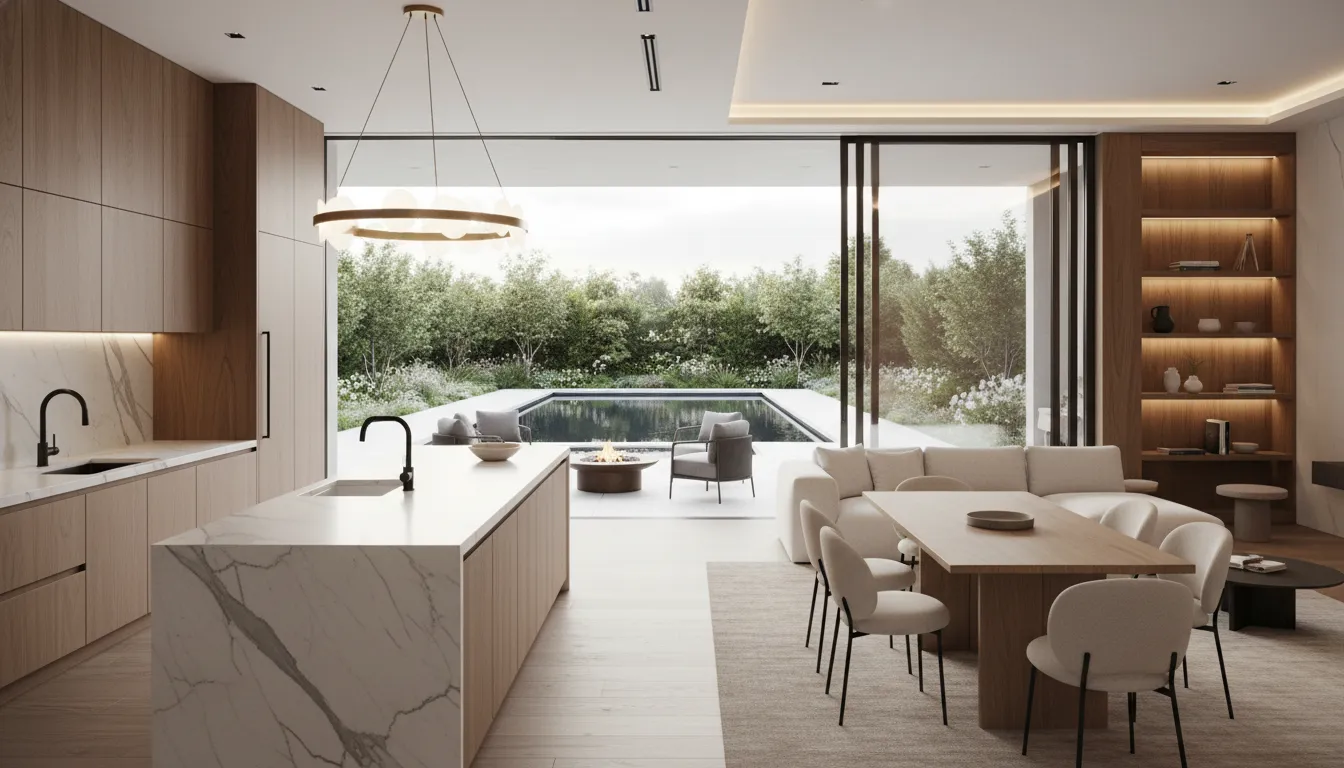
We believe a thoughtfully designed home elevates daily life. A modern luxury home blends refined materials, purposeful layout, and effortless indoor-outdoor connections to create spaces that feel calm, functional, and memorable. This article outlines the design principles, room-by-room approaches, finishes, lighting strategies, and smart-home integrations that define contemporary luxury. It also includes actionable guidance for translating inspiration into a real home upgrade or new build.
Table of Contents
- Key takeaways
- Why modern luxury matters for home life
- Signature spaces and what to prioritize
- 2026 design trends shaping luxury homes
- Material choices and finishes that read luxury
- Lighting: layering for mood and function
- Smart home integration without complexity
- Planning layout and flow for real living
- Furnishing and styling: restraint with intent
- Room-by-room checklist for a polished home
- Budgeting: where to spend and where to save in a home
- Procurement and sourcing strategies for a still-beautiful home
- Implementation: a realistic timeline for a whole home refresh
- Practical styling tips to make a home feel immediately luxurious
- Common pitfalls and how to avoid them in your home project
- Checklist: 20 actionable items to upgrade any home
- Financing and value considerations for a modern home
- Working with professionals to realize the home you want
- How to start: a simple three-step action plan for the home
- Maintaining luxury: operations and upkeep for the home
- What luxury will look like in the next five years
- Bringing it together
- Further resources and next steps
Key takeaways
- Open plans with defined zones create a comfortable flow in a modern luxury home.
- Invest in a few high-impact finishes—kitchen countertops, bathroom tile, and lighting fixtures—rather than trying to upgrade everything.
- Indoor-outdoor living is central: large glass transitions and outdoor rooms extend usable space.
- Smart home features should be integrated discreetly to enhance comfort and security without dominating aesthetics.
- Layered lighting and texture turn minimal architecture into warm, livable interiors.
Why modern luxury matters for home life
A modern luxury home is more than opulence. It is an intentional environment that supports how we live, work, and socialize. The best homes balance beauty with practicality, using restrained palettes, natural materials, and adaptable spaces that respond to changing needs.
When we design or refine a home, we aim for clarity of purpose. The kitchen functions as a social hub and chef workspace. The primary suite becomes a restorative retreat. Living areas encourage conversation and relaxation. Outdoor rooms extend the home’s daily footprint. Each space must feel proportionate to its purpose while contributing to an overall sense of cohesion.
Signature spaces and what to prioritize
The gourmet kitchen
The kitchen is often the most visible driver of value in a modern home. A luxury kitchen combines high-performance appliances, thoughtful storage, and an island that supports multiple uses: meal prep, casual dining, and socializing.
- Appliances: Choose professional-grade ranges, integrated refrigerators, and quiet dishwashers to support longevity and performance.
- Surfaces: Quartz, porcelain slabs, or honed stone for countertops keep the look clean while resisting wear.
- Storage systems: Deep drawers, pull-out pantry units, and dedicated appliance garages reduce clutter and make the kitchen feel larger.
- Lighting: Task lighting under cabinets, pendants over the island, and recessed ambient fixtures create a layered, useful environment.
Primary suites and spa bathrooms
The primary suite in a modern home is a private refuge. It should prioritize comfort, daylight, and storage, while the bathroom should read like a spa—calming materials, generous showers, and quality fixtures.
- Bedroom: Large windows, blackout treatments, and acoustics that limit noise make the suite restful.
- Closets: Walk-in closets with modular organizers make dressing effortless and preserve order in the bedroom.
- Bathrooms: Consider walk-in showers with linear drains, freestanding tubs where space allows, and double vanities with concealed storage.
Open living spaces and flexible zones
Modern luxury homes favor open-plan living, but that openness should be organized: zone seating, define paths, and use rugs, lighting, and furniture to create intimacy within large rooms. Flex rooms can adapt to a home office, media room, or guest suite as needs shift.
Outdoor living
Outdoor rooms are an extension of the home. A well-designed patio, covered lounge, or landscaped backyard becomes usable year-round when paired with heating elements, shade structures, and weather-resistant furnishings.
- Seamless transitions: Operable glass walls or sliding doors create a visual and functional link between indoors and outdoors.
- Outdoor kitchens: Even a compact grilling station with refrigeration and storage elevates entertaining.
- Landscaping: Layered planting and lighting define outdoor rooms and provide privacy.
2026 design trends shaping luxury homes
Design trends evolve, but several key directions are shaping luxury homes for 2026 and beyond. These trends help prioritize investments that retain relevance and enhance daily living.
1. Quiet minimalism with tactile warmth
Minimal palettes—soft whites, warm greys, and muted earth tones—create calm. Texture becomes the primary source of interest: wood grain, matte plaster, and woven textiles add depth without visual clutter. In a home, this approach results in spaces that feel curated rather than cold.
2. Curved architecture and built-ins
Curves soften modern architecture and improve flow. Arched openings, rounded kitchen islands, and built-in window seating create comfortable moments throughout the home. Built-ins reduce the need for additional furniture and keep rooms looking tailored.
3. High-performance sustainability
Sustainable strategies are now table stakes in luxury home design. Energy-efficient glazing, improved insulation, photovoltaic integration, natural ventilation, and responsibly sourced materials reduce operating costs and support long-term value.
4. Technology, subtly embedded
Smart-home features are expected, but less visible. Integrated controls for lighting, shading, security, and HVAC should be intuitive and discreet. In a luxury home, the technology should enhance comfort without dominating aesthetics.
5. Personalized wellness spaces
Wellness rooms, saunas, and meditation nooks are appearing in more homes. These spaces are designed to support physical and mental health, integrating natural light, ventilation, and calming finishes.
Material choices and finishes that read luxury
Choosing finishes is where vision becomes tangible. When selecting materials for a home, prioritize permanence, texture, and craftsmanship. Here are the areas to allocate budget strategically.
Floors and base surfaces
Quality flooring sets the tone for the entire home. Wide-plank hardwood, large-format porcelain tile, and polished concrete are common choices. For durability in high-traffic zones, choose finishes that age gracefully.
Countertops and bathroom surfaces
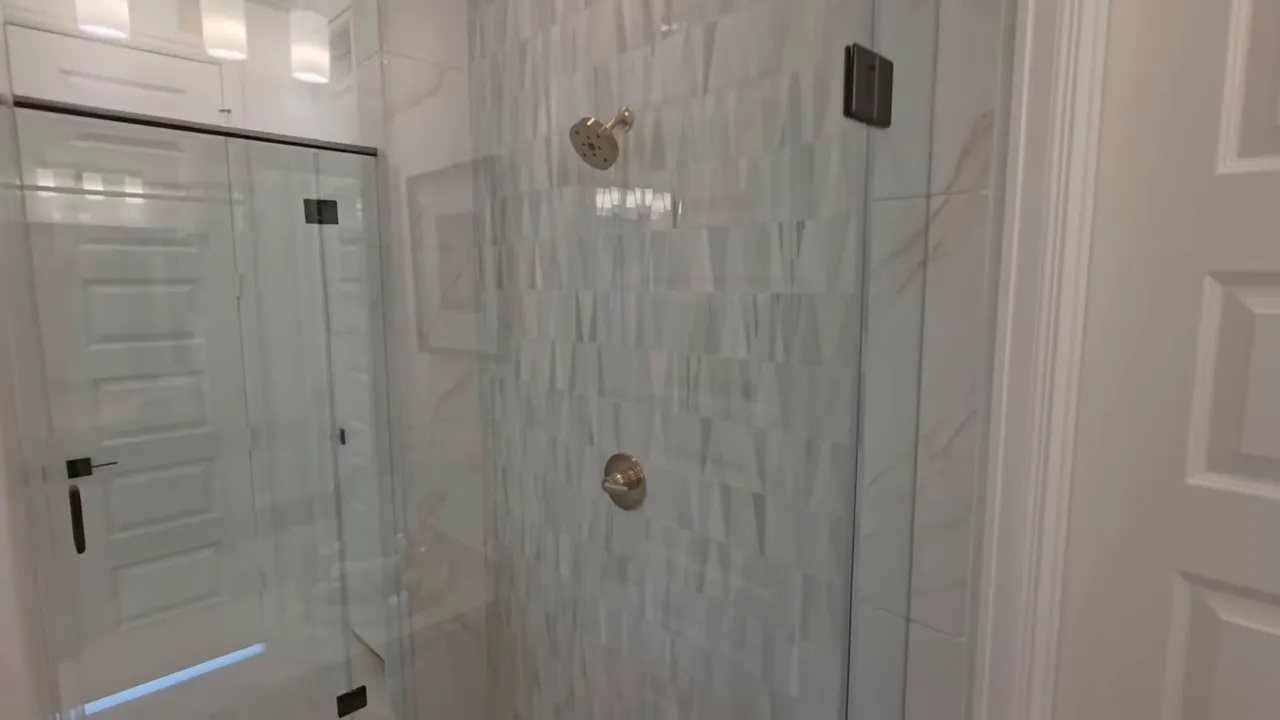
Invest in durable, low-maintenance countertops. Engineered stone surfaces provide consistency, while natural stone makes a statement. In bathrooms, large-format tiles with minimal grout lines read as luxurious and are easier to maintain.
Cabinetry and millwork
Custom cabinetry with soft-close hardware and integrated organizers elevates both kitchens and bathrooms. Flat-panel cabinetry in a matte finish reads modern, while subtle wood veneers add warmth in living areas.
Hardware and fixtures
Hardware is small but impactful. Choose coordinated finishes for faucets, cabinet pulls, and light switch plates. Brushed metals and matte black remain popular for their ability to complement a range of palettes.
Lighting: layering for mood and function
Lighting defines rooms. In a modern home, we layer ambient, task, and accent lighting to create comfort, drama, and usability. LED technology offers flexibility in color temperature and intensity without sacrificing energy efficiency.
- Ambient: Recessed fixtures and cove lighting provide general illumination.
- Task: Under-cabinet lights in kitchens and dedicated fixtures over work areas support daily activities.
- Accent: Wall sconces, picture lights, and track lighting highlight art and architectural features.
- Control: Dimmers, scene presets, and voice control let us tailor lighting to moments, from quiet evenings to full-house entertaining.
Smart home integration without complexity
A modern luxury home uses technology to simplify life. We prioritize systems that are reliable, user-friendly, and easily maintained by contractors and future homeowners.
- Core systems: HVAC zoning, whole-home audio, secure access, and lighting control form the backbone.
- Security: Integrated cameras, smart locks, and door sensors should be inconspicuous and monitored through a single app.
- Automation: Routine automations—morning lighting scenes, shading schedules, and climate setbacks—add convenience with minimal user input.
- Future-proofing: Wired backbone and expandable hubs allow new devices to be added without major rewiring.
Planning layout and flow for real living
Good layout anticipates how we move through a home. Efficiency, sightlines, and privacy are the three pillars we consider.
Efficiency
Locate high-use rooms near each other. Kitchens, pantries, and informal dining should connect to outdoor entertaining. Laundry rooms placed near bedrooms reduce daily friction.
Sightlines
Open views through a home create a sense of spaciousness. Align major sightlines to outdoor focal points. Use partial walls, bookcases, or screens to maintain openness while providing subtle separation.
Privacy
Buffer private bedrooms and home offices from noisy public areas. Use transitional spaces—mudrooms, corridors, and vestibules—to create a gradual move from public to private.
Furnishing and styling: restraint with intent
Furnishings in a luxury home should support lifestyle and highlight architecture. We favor fewer, better pieces over maximalist layouts. Textiles, lighting, and curated art bring personality without clutter.
- Scale: Ensure furniture proportions match room dimensions. Oversized sofas in small rooms make spaces feel cramped.
- Function: Choose multipurpose furniture where appropriate—console tables that become desks, benches with storage.
- Color: Use accent colors sparingly to preserve a calm foundation. A single saturated element—an armchair or a rug—can inject character.
- Art and accessories: Larger scale art supports modern minimalism; groupings should breathe, not crowd.
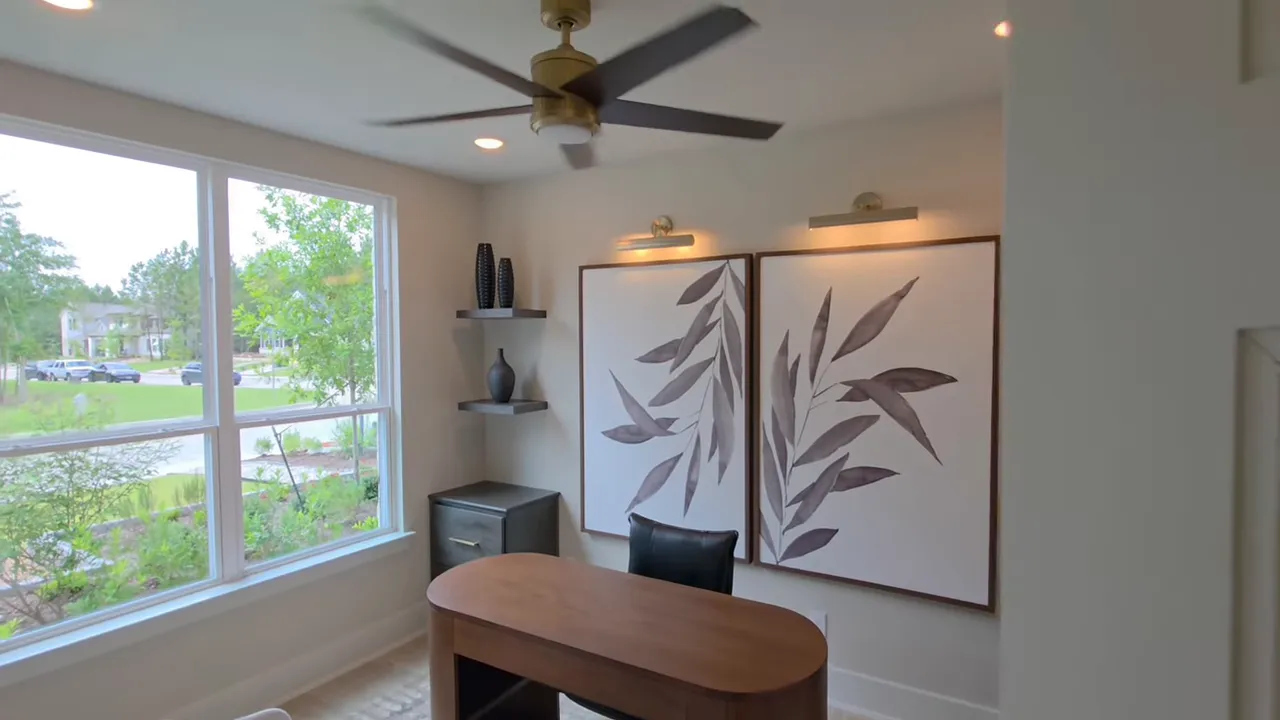
Room-by-room checklist for a polished home
Use this checklist to evaluate each space in the home and decide where to focus time and budget.
Entry and foyer
- Define the entry with a clear path and a focal point such as a console, mirror, or sculptural light.
- Provide durable flooring that transitions well to the rest of the home.
- Include storage for shoes, outerwear, and incoming parcels.
Kitchen
- Confirm appliance layout supports cooking workflow: fridge, sink, stove triangle.
- Design an island with seating and storage; plan for plumbing and electrical as needed.
- Specify durable countertops and backsplash materials that are easy to maintain.
Living and dining
- Plan seating zones and circulation paths to support gatherings.
- Integrate media discreetly with cabinetry or wall niches.
- Layer lighting for different uses: dining, reading, ambient.
Primary suite
- Position the suite for privacy and daylight without direct street views.
- Include a comfortable walk-in closet with organized storage modules.
- Design the bathroom for long-term comfort with quality fixtures.
Secondary bedrooms and flex rooms
- Ensure bedrooms have adequate closet space and natural light.
- Use flex rooms to provide a home office, gym, or guest suite depending on needs.
Laundry and utility
- Provide counter space for folding and storage for supplies.
- Locate close to bedrooms or primary circulation routes for convenience.
Outdoor areas
- Plan for weather protection: pergolas, covered patios, or retractable awnings.
- Include zones for dining, lounging, and active uses.
- Specify durable outdoor materials and furniture that align with the interior palette.
Budgeting: where to spend and where to save in a home
Budgets vary, but allocating resources strategically increases long-term satisfaction in a home. Here is a general prioritization to guide decisions.
Spend on:
- Structural quality: Proper insulation, roof, and windows protect the home and reduce operating costs.
- Major finishes: Kitchen countertops, primary bathroom tiles, and hardwood flooring are hard to change later.
- Lighting and electrical: Flexible circuits, dimmers, and good-quality fixtures support future needs.
- Wellness and comfort: HVAC zoning, acoustical treatments, and water filtration pay off daily.
Save on:
- Decorative accessories: Rugs, cushions, and art can be refreshed affordably.
- Entry-level furniture: Use pieces that can be upgraded over time rather than base every room on costly purchases up front.
Procurement and sourcing strategies for a still-beautiful home
Delivering a cohesive home requires staging decisions and efficient procurement. We recommend a phased approach to sourcing to balance quality and timing.
Phase 1: Core contractors and systems
Lock in structural trades, HVAC, electrical, and plumbing. These systems determine what is possible for finishes and technology later on.
Phase 2: Major finishes and custom millwork
Order kitchen cabinetry, custom closets, and bathroom vanities early. Lead times can push schedules, and installing these before final paint avoids damage.
Phase 3: Furnishings and soft goods
Schedule upholstery and rugs after paint and flooring are completed. This ensures color and scale decisions are informed by the finished surfaces in the home.
Implementation: a realistic timeline for a whole home refresh
Whether building new or renovating, a realistic timeline keeps the project on track and reduces stress.
- Planning and design — 4 to 8 weeks: Concept, schematic plans, and budgeting.
- Permitting and procurement — 2 to 12 weeks: Permits and ordering long-lead items.
- Construction — 8 to 24 weeks: Structural work, systems, and finishes depending on scope.
- Furnishings and styling — 2 to 8 weeks: Delivery and installation of furniture and accessories.
Practical styling tips to make a home feel immediately luxurious
We can transform a home’s perceived luxury with thoughtful styling and small investments. These tactics are easy wins:
- Declutter: Clear surfaces reveal architecture and finishes. Less is often more.
- Scale artwork: Oversized art or large groupings create a curated gallery feel in a home.
- Layer textiles: A mix of textures in throws, pillows, and rugs adds tactile richness to living spaces and bedrooms.
- Greenery: A few well-placed plants enliven a home and improve air quality.
- Rotate accessories seasonally: Small changes keep a home feeling fresh without large expense.
Common pitfalls and how to avoid them in your home project
Avoiding common mistakes helps a home project stay on time and budget. Here are pitfalls we frequently see and how to sidestep them.
Underestimating timelines
Lead times for appliances, custom cabinetry, and specialty finishes can extend schedules. Build buffer time into the plan and order long-lead items early.
Over-personalizing early
Making bold, permanent choices early—such as saturated wall colors or highly specific fixtures—can limit future flexibility in the home. Reserve a few versatile elements that can adapt as tastes evolve.
Neglecting storage
Storage is the backbone of a functional home. Incorporate concealed storage and built-ins to preserve clean sightlines and reduce clutter.
Checklist: 20 actionable items to upgrade any home
- Audit the circulation paths in your home and remove obstacles.
- Identify one high-impact surface to upgrade—countertop, floor, or backsplash.
- Install dimmers on primary lighting circuits for flexible ambiance.
- Upgrade door hardware and cabinet pulls to coordinated finishes.
- Choose a neutral paint palette and add color with textiles.
- Replace cheap window coverings with layered treatments: blinds plus drapes.
- Integrate at least one statement lighting fixture in a main room.
- Reorganize closets with modular systems for better long-term function.
- Install quality faucets and showerheads to improve daily rituals.
- Replace worn rugs with appropriately scaled new pieces.
- Landscape for privacy and outdoor definition.
- Designate a well-lit workspace with sufficient outlets and storage.
- Invest in one durable furniture piece that will anchor a living area.
- Install automated shades or smart controls for convenience.
- Plan for sound control in media areas with acoustic panels or soft finishes.
- Add visual continuity with repeated materials or colors across rooms.
- Use under-cabinet lighting in kitchens for both task and mood.
- Keep a running maintenance budget for seasonal home care.
- Curate art and objects with restraint for a cohesive look.
- Test smart-home workflows before committing to wide deployment.
Financing and value considerations for a modern home
Design decisions should align with market expectations if resale value is a concern. Neutral palettes, quality systems, and well-executed layouts tend to preserve or increase value across neighborhoods.
When financing improvements, prioritize investments that improve livability and reduce operating costs—insulation, glazing, HVAC efficiency, and durable finishes. These choices have measurable returns in comfort and utility savings for the home.
Working with professionals to realize the home you want
Engage the right team early. Architects and experienced designers translate lifestyle goals into a clear plan. Reliable contractors execute details and manage schedule complexities.
- Designer or architect: Clarifies the vision and produces usable drawings.
- General contractor: Coordinates trades and keeps the project on schedule.
- Specialists: Landscape designers, lighting consultants, and AV integrators enhance specific systems in the home.
How to start: a simple three-step action plan for the home
Begin with a focused approach to make progress without overwhelm.
- Define priorities: Identify the top three pain points or highest-impact upgrades for the home.
- Set a realistic budget and timeline: Include contingencies for unexpected items that arise during renovation.
- Assemble the core team: Hire an architect or designer and a contractor to produce a project plan.
Maintaining luxury: operations and upkeep for the home
Ongoing care keeps a home feeling new. Create a simple maintenance calendar to manage seasonal tasks, filter changes, and systems checks.
- Quarterly: Inspect HVAC filters, clean range hood filters, and test smoke detectors.
- Semi-annually: Deep clean carpets, check window seals, and service appliances as recommended.
- Annually: Schedule HVAC servicing, gutter cleaning, and exterior paint touch-ups where needed.
What luxury will look like in the next five years
We expect homes to become more responsive, resilient, and human-centered. The emphasis will shift further toward adaptable spaces, circular material systems, and technology that supports wellness without detracting from the home’s design integrity.
Futures where homes are energy-positive, where interiors evolve with modular furnishings, and where technology anticipates needs rather than interrupts them are already beginning to influence today’s decisions. Designing a home with these trajectories in mind protects value and enhances daily life.
Bringing it together
Designing or upgrading a modern luxury home is a balance of vision, prioritized investment, and practical execution. Focus on durability, comfort, and seamless indoor-outdoor relationships. Layer lighting, texture, and quality finishes to create spaces that feel curated and livable.
We recommend starting small: choose one room to upgrade with a strategy that aligns finishes, lighting, and layout. Once that room succeeds, the approach becomes replicable across the home. With measured decisions and a capable team, any house can evolve into a home that supports daily life and long-term value.
Further resources and next steps
For project planning, keep a running inspiration folder with images and notes from spaces that feel right for your home. Ask trades for references and recent examples of finished work. When selecting finishes, order samples and live with them in natural light to ensure they meet expectations.
We are available to help with design questions and practical advice as projects move from idea to reality. Thoughtful planning and selective investments will deliver a home that is both luxurious and enduring.
Designing a Modern Luxury Home: Trends, Layouts, and Practical Steps for Inspired Living. There are any Designing a Modern Luxury Home: Trends, Layouts, and Practical Steps for Inspired Living in here.

