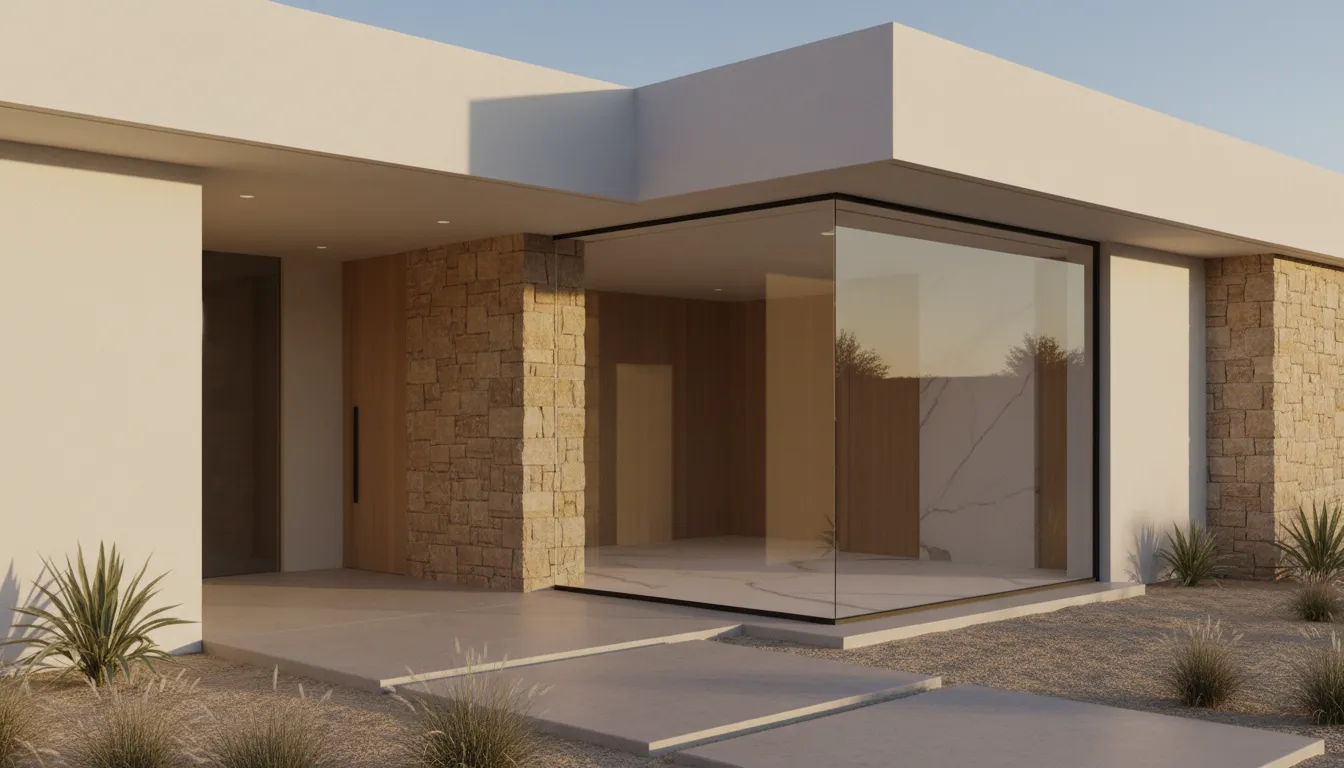
We examine a refined approach to decoration where restraint becomes the highest form of sophistication. The defining idea is simple: decoration is not a catalogue of objects; it is the orchestration of space, light, and material to create calm. We use this elegant minimalist residence as a case study in modern decoration, extracting practical techniques that translate directly to renovations, new builds, or staged interiors.
Table of Contents
- 🪟 First impressions: How elevation and materials shape decoration
- 💡 Entryway and foyer: Decoration that sets the tone
- 🛋️ Living area: Open-plan decoration and the rules of calm
- 🔥 Fireplace and focal surfaces: Decoration with architectural intent
- 🍽️ Dining room: Decoration as experience
- 👩🍳 The kitchen: Decoration driven by function and restraint
- 🗄️ The butler's pantry: Hidden decoration strategies
- 🌿 Indoor-outdoor flow: Decoration beyond walls
- 🏢 Home office: Decoration that supports focus
- 🪜 Staircase: Decoration as architectural sculpture
- 🛏️ Primary suite: Decoration for comfort and retreat
- 🛁 Primary bath: Decoration with a spa sensibility
- 👗 Walk-in wardrobe: Decoration as boutique retail
- 🛏️ Guest suites and secondary rooms: Decoration that respects privacy
- 🧺 Laundry and utility spaces: Decoration for efficiency
- 🏡 Backyard, pool, and lanai: Exterior decoration as lifestyle
- 🌙 Exterior lighting: Nighttime decoration and atmosphere
- 🔋 Sustainability and smart systems: Decoration with responsibility
- 🧭 Principles to apply: A practical decoration checklist
- 🛠️ Budgeting decoration: Where to invest and where to economize
- 🧩 Decoration mistakes to avoid
- 📐 Decoration exercises to implement immediately
- 📚 Examples of decoration choices that endure
- 🔁 Decorating with flexibility: How to evolve a scheme
- 🔍 Final reflections: How decoration defines experience
- 📝 Practical next steps for your decoration project
- 📸 Visual references and inspirations
- 🔧 Maintenance-minded decoration
- 📦 Sourcing and procurement for decoration
- 📅 Timing your decoration: Phased delivery
- 📣 Final notes on decoration as investment
- 🔗 Want to apply these decoration principles?
🪟 First impressions: How elevation and materials shape decoration
From the street, the home announces its intent through confident geometry and a restrained material palette. The façade combines natural stone with smooth stucco to create a tactile contrast that reads as both organic and sophisticated. Effective decoration starts at this threshold: the materials you choose for the exterior become the visual promise of what lies inside.
Key principles for exterior decoration we can apply:
- Limit the palette to two or three complementary materials so the façade reads as cohesive rather than busy.
- Use texture to add warmth — stone, timber, and textured plaster integrate with landscaping to soften strong geometry.
- Treat windows as punctuation marks — floor-to-ceiling glazing creates vertical rhythm and hints at interior volume.
When we plan decoration for a property, we consider how each exterior element controls expectations. A deliberate, simple palette invites a quieter interior scheme and amplifies perceived space.
💡 Entryway and foyer: Decoration that sets the tone
The entry is the spatial thesis statement. Double-height ceilings, a massive pivot door, and a sculptural light fixture communicate a clear point of view. This is decoration as storytelling: one or two bold choices define the narrative and free the rest of the design to be restrained.
Elements to prioritize in foyer decoration:
- Scale first. High ceilings permit larger fixtures and give room for vertical accents.
- Quality lighting. A single sculptural fixture serves as jewelry; task lighting remains discreet.
- Minimal accessories. A small console, a tray for keys, and a purposeful rug are enough.
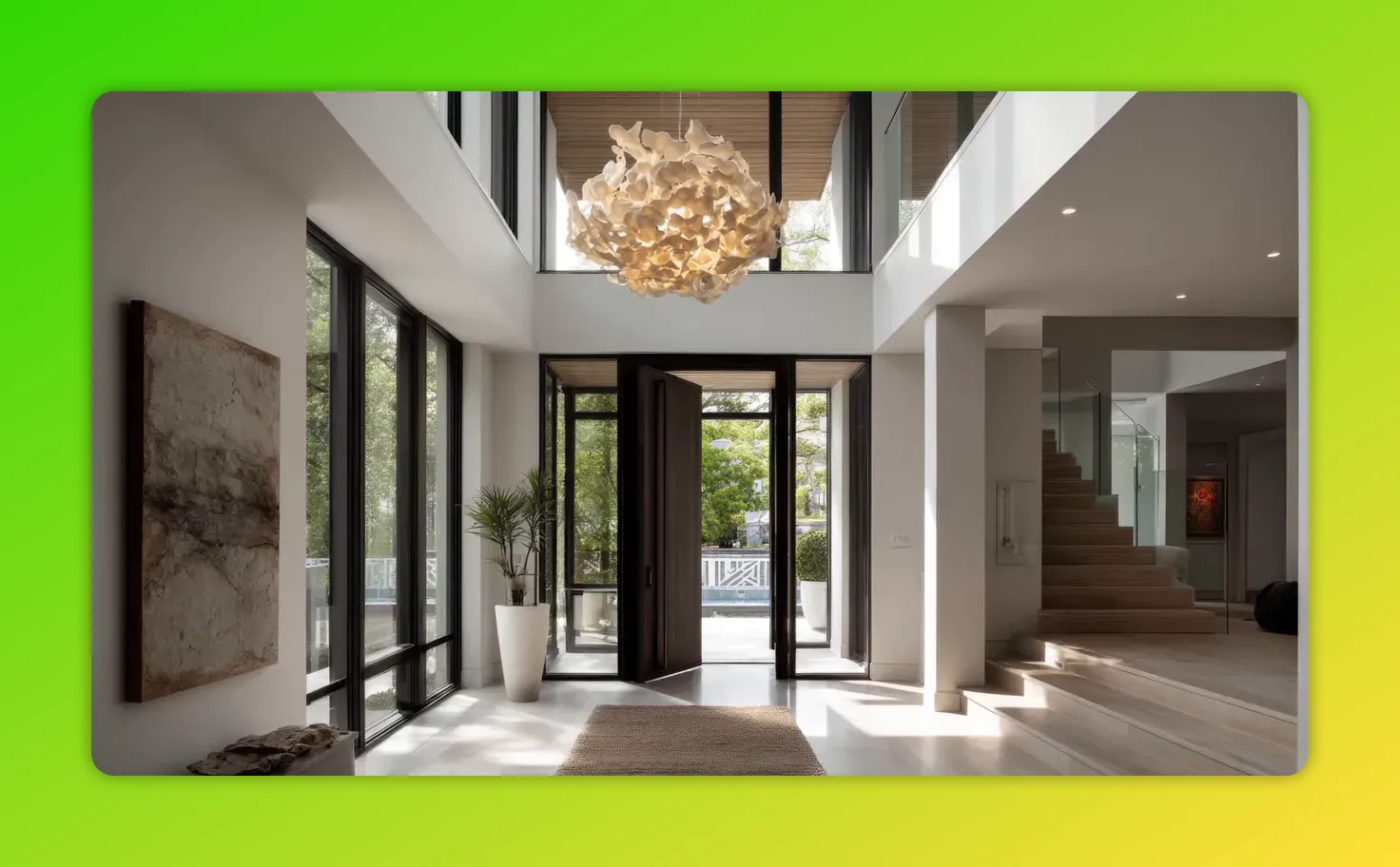
We adopt a "less but better" approach to decoration here. The foyer acts like a visual filter: what is introduced should be durable, tactile, and proportionally correct. This makes entering the home a calm, composed experience rather than a noisy one.
🛋️ Living area: Open-plan decoration and the rules of calm
The living area showcases open-concept decoration done well. A monochromatic color scheme of creams, beiges, and soft grays produces a sanctuary-like backdrop. Furnishings are intentionally low profile and arranged for conversation, not spectacle.
Techniques for living area decoration that create comfort without clutter:
- Anchor with a single high-quality piece. In this home the Italian leather sectional becomes the focal anchor for layout and scale.
- Vary textures, not colors. Mix leather, wool, stone, and timber to keep a neutral palette dynamic.
- Prioritize circulation. Furniture should support flow and social interaction rather than fill every square foot.
Quiet luxury in decoration emphasizes material and craftsmanship over brand signage. We recommend selecting durable finishes that age gracefully; a well-made leather sofa, a marble slab, or solid timber tables pay visual dividends over time.
🔥 Fireplace and focal surfaces: Decoration with architectural intent
A linear gas fireplace wrapped in floor-to-ceiling marble demonstrates how functional elements can be elevated through decoration. Instead of decorative clutter, the surface itself becomes the ornament.
When incorporating a fireplace or similar focal surface into decoration plans:
- Choose a single strong material that extends vertically to emphasize height and create a visual spine.
- Let subtle patterning do the work. Natural veining or grain introduces movement without overwhelming the space.
- Balance with negative space. Keep surrounding walls and accessories restrained so the feature breathes.
We always advise against over-accessorizing an architectural feature. Treat it like a piece of built-in art: the decoration should frame it rather than compete with it.
🍽️ Dining room: Decoration as experience
The dining area bridges casual living and formal hosting. A long white oak table paired with wishbone-style chairs creates an approachable, tactile setting. The proximity to garden views makes each meal feel connected to the outdoors, an important principle in contemporary decoration.
Dining decoration guidelines we recommend:
- Prioritize durable materials for tables and chairs so the decoration supports daily life.
- Use seating as texture. Mixed materials in chairs help add depth without changing the overall color story.
- Frame the view. Position seating and lighting to emphasize external vistas as part of the decorative composition.
Even in a neutral scheme, decorative impact comes from scale, proportion, and the deliberate omission of competing elements.
👩🍳 The kitchen: Decoration driven by function and restraint
The kitchen is the most instructive room for contemporary decoration. Handless cabinetry in matte charcoal, a waterfall quartz island, and integrated appliances demonstrate how utility and aesthetics merge. Decoration here is about concealing visual noise while exposing the craft of the finishes.
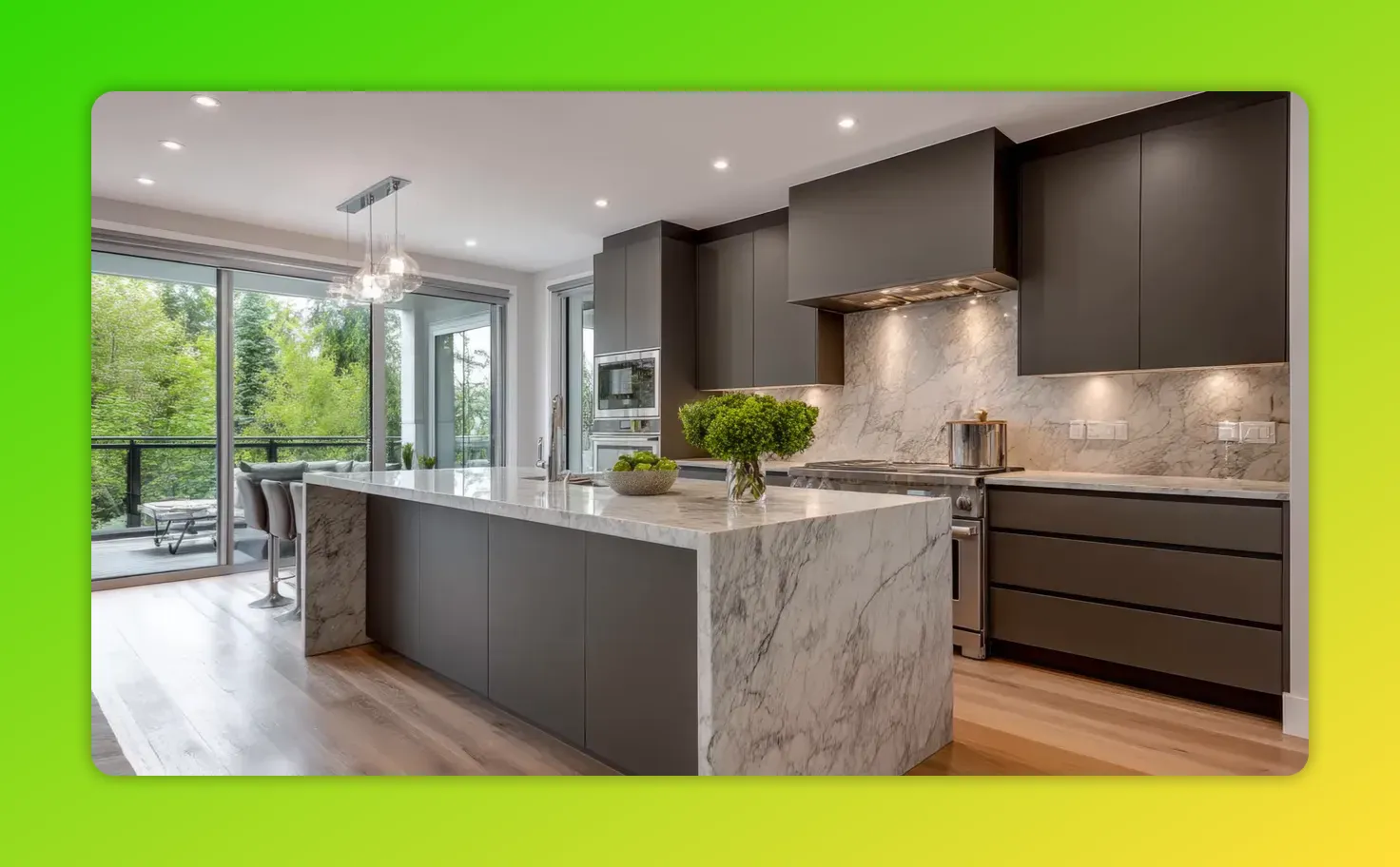
Kitchen decoration essentials to adopt:
- Hide rather than display. Flat-panel or handless cabinets reduce visual clutter and make the countertop the focal plane.
- Invest in a high-quality island. A waterfall countertop provides a sculptural central object that functions as both work surface and decorative anchor.
- Layer lighting. Under-cabinet LEDs and pendant task lights deliver both function and mood.
We also recommend planning for logistics as decoration. The presence of a pot filler, integrated smart appliances, and a hidden pantry reduces the need for countertop appliances and keeps the decorative field serene.
🗄️ The butler's pantry: Hidden decoration strategies
A concealed butler's pantry is one of the smartest decoration moves in luxury homes. It allows heavy prep to happen out of sight so the primary kitchen remains uncluttered. In decoration terms, hidden service spaces are as important as visible ones.
How to treat service spaces in decoration planning:
- Design for sequence. The main kitchen should look undisturbed during entertaining; the pantry handles dirty work.
- Use consistent surfaces. Extend similar finishes into the pantry to maintain the visual narrative.
- Include task-specific storage. Open shelving, a second dishwasher, and appliance niches keep functionality streamlined.
We consider the butler's pantry an invisible layer of decoration — it preserves the composition of primary spaces.
🌿 Indoor-outdoor flow: Decoration beyond walls
Decoration extends to how spaces connect. Massive sliding glass pocket doors that vanish into the walls effectively double the living area and allow the exterior palette to become part of the interior decoration.
Principles to strengthen indoor-outdoor decoration:
- Match materials. Carry exterior stone, timber, or tones into the interior so the transition is seamless.
- Plan for shade. Covered lanai and adjustable screens control light and maintain comfort without sacrificing the view.
- Compose outdoor rooms. An outdoor kitchen, lounge, and reflective pool act as exterior decorative elements.
We view outdoor areas as an extension of interior decoration rather than separate entities. Treat them with the same attention to material, scale, and lighting.
🏢 Home office: Decoration that supports focus
Remote work requires domestic spaces that support deep concentration. The home office in this house is tucked into a quiet ground-floor corner, with built-in shelving and a floating desk facing a private courtyard. Decoration is pared back to reduce distractions and enhance productivity.
Guidelines for productive office decoration:
- Use calming tones and natural wood to reduce visual strain.
- Prioritize storage so supplies and cables remain out of sight, maintaining a composed decorative plane.
- Frame a view to provide a restorative connection to nature without overwhelming the workspace.
We recommend integrating task lighting and acoustical solutions early in the decoration plan so the office functions well for long hours.
🪜 Staircase: Decoration as architectural sculpture
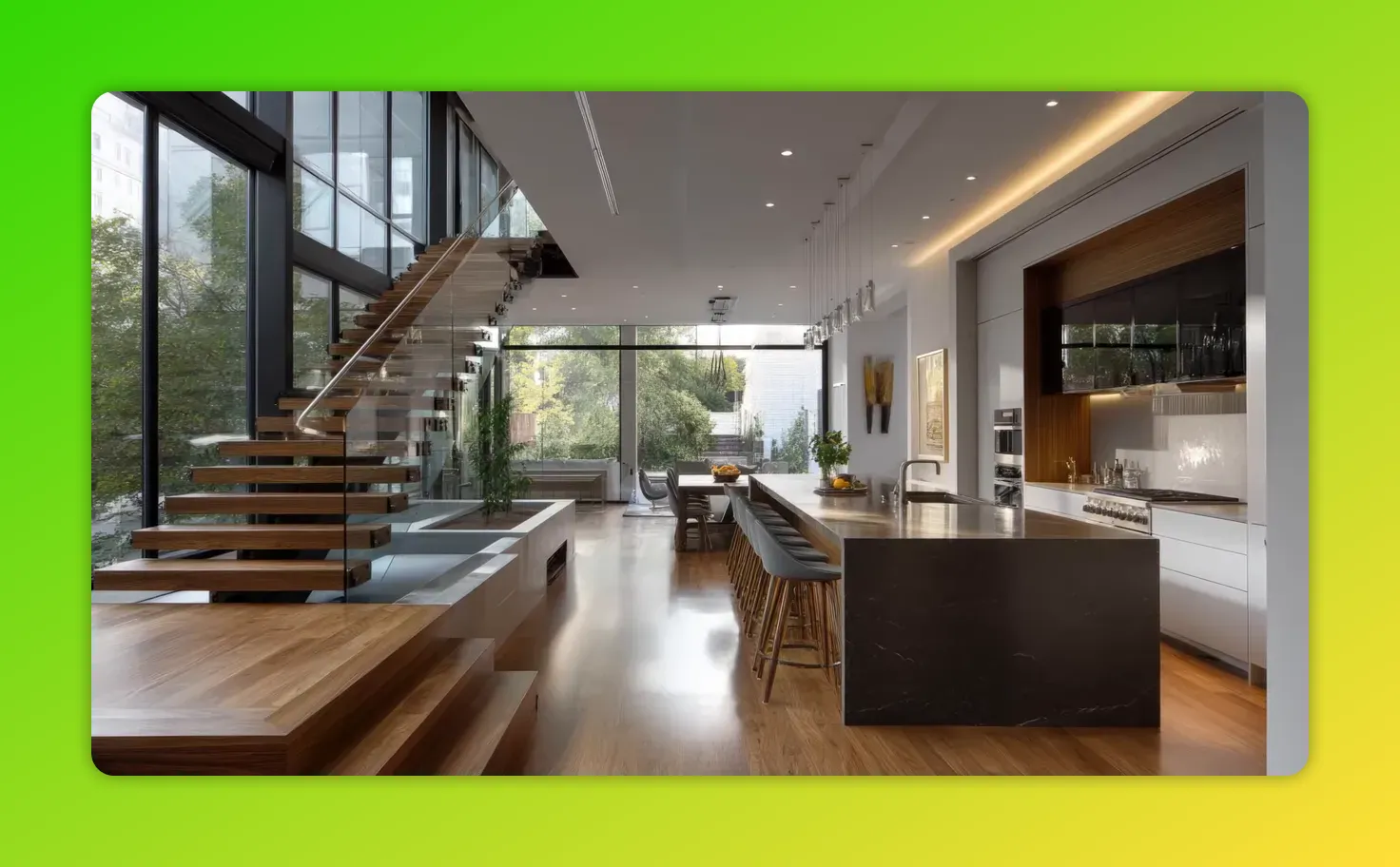
The floating staircase is a striking example of decoration embodied in structure. Solid timber treads, a central steel spine, and frameless glass balustrades make it a vertical sculpture that defines the home's character. When a circulation element is treated as decoration, every movement between floors becomes an experience.
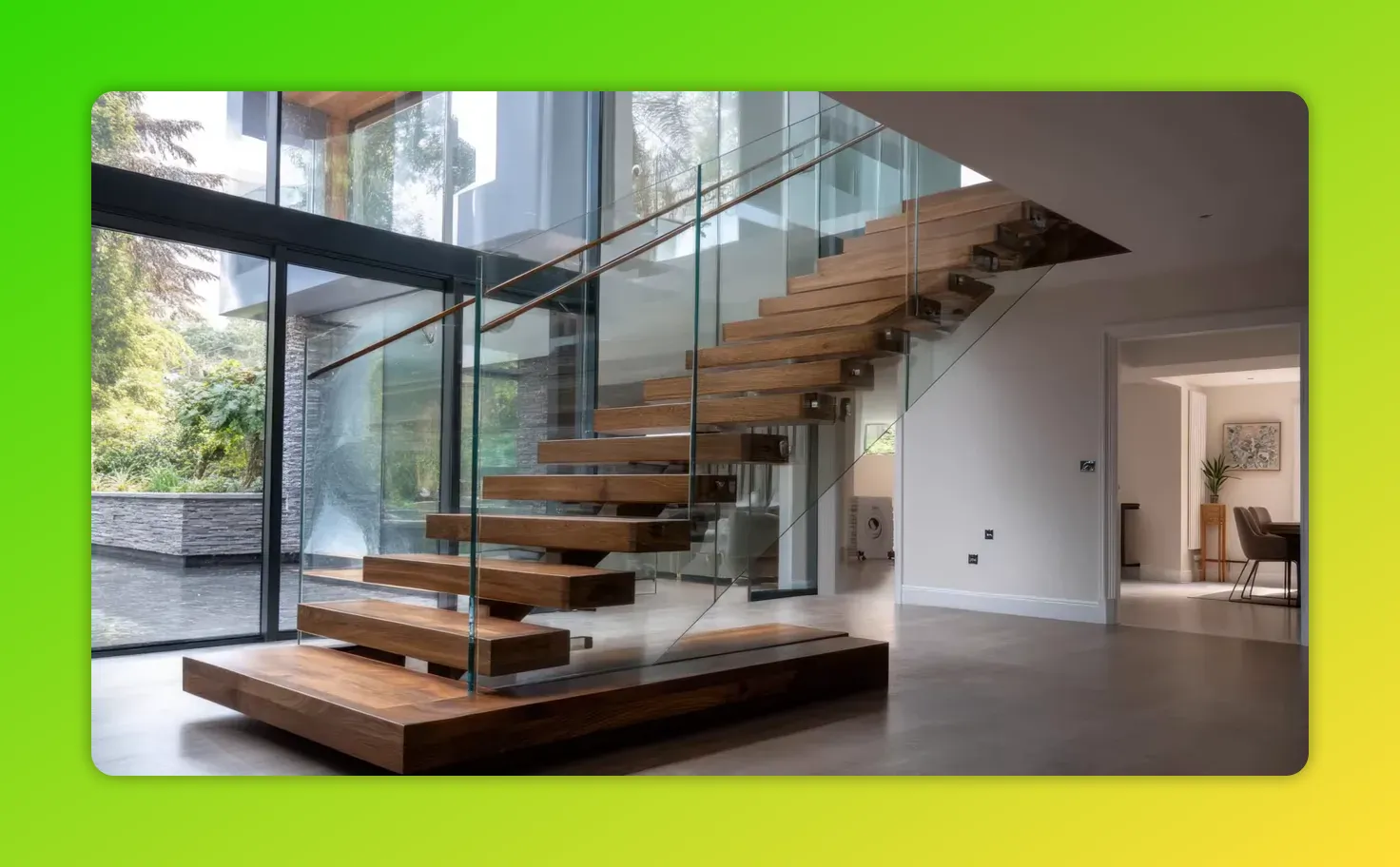
How to design staircases as decorative elements:
- Keep lines clean so the staircase reads sculpturally against the architectural backdrop.
- Use materials that contrast yet harmonize — timber treads with steel supports is a classic contemporary combination.
- Light it intentionally to emphasize form and provide safe circulation without adding visual clutter.
We often advise that a staircase can be the single most powerful decorative investment in a new build because of its daily visibility and sculptural potential.
🛏️ Primary suite: Decoration for comfort and retreat
The primary bedroom shifts the decoration language from architectural boldness to softness. Wool carpeting, heavy linen drapery, and a padded headboard create a cocoon-like environment. The bedroom demonstrates how decoration changes functionally across public and private zones.
Private suite decoration strategies:
- Layer soft materials — rugs, drapes, throws — to add tactile depth.
- Create separate zones within the suite for sleeping, lounging, and dressing to support different activities.
- Control natural light with drapery or blinds so the room can switch easily between bright and dim.
We encourage balancing the public-facing boldness of other rooms with restful domestic decoration in sleeping areas.
🛁 Primary bath: Decoration with a spa sensibility
The ensuite bath reads like a five-star retreat. A freestanding soaking tub in front of a picture window, a floating dual vanity, and large-format porcelain tiles create a spa-like environment. Decoration here focuses on materials that are beautiful and low maintenance.
Bathroom decoration recommendations:
- Prefer large-format tiles to reduce grout lines and create a calm visual field.
- Choose floating vanities to increase perceived floor space and simplify cleaning.
- Incorporate nature — views, plantings, or warm materials — to reinforce tranquility.
We emphasize planning for lighting and ventilation early; decoration that ignores function will not age well in wet environments.
👗 Walk-in wardrobe: Decoration as boutique retail
A walk-in wardrobe designed like a boutique is a clear statement: dressing becomes an elevated ritual. Glass-fronted cabinets, shoe displays, and a central island turn storage into a decorative showcase.
Practical decoration tips for wardrobes:
- Use layered lighting to flatter fabrics and surfaces.
- Include display moments for special items while keeping daily wear accessible.
- Choose finishes that reflect light to keep the space feeling generous.
We recommend treating the wardrobe as both functional storage and an opportunity to reinforce the home's material story through consistent decorative choices.
🛏️ Guest suites and secondary rooms: Decoration that respects privacy
Guest bedrooms receive the same design rigor as the primary suite, but with a neutral, accommodating approach. Each room has a private bathroom and ample storage, which is essential decorative infrastructure.
How we approach decoration for secondary rooms:
- Keep palettes flexible to suit a variety of tastes and needs.
- Prioritize comfort — mattress quality, layered bedding, and adequate lighting.
- Provide storage so guests can settle without creating clutter that would disrupt the decorative composition.
We believe good decoration anticipates how a space is used by different people and adapts accordingly.
🧺 Laundry and utility spaces: Decoration for efficiency
Even service spaces deserve design attention. Pattern tile flooring, folding counters, and cabinetry that conceals detergents demonstrate how decoration elevates everyday chores.
Utility decoration checklist:
- Design for ergonomics — counter heights and machine placement matter.
- Use durable finishes that handle moisture and wear.
- Keep visual calm by concealing supplies and using cohesive finishes.
We find that well-considered decoration in utility rooms reduces daily friction and reinforces the overall sense of order in a home.
🏡 Backyard, pool, and lanai: Exterior decoration as lifestyle
The rear of the house focuses on leisure and hospitality. A covered lanai with a wood-paneled ceiling, an outdoor kitchen, manicured low-maintenance landscaping, and a reflective swimming pool create a resort-like experience. Decoration outdoors must balance durability with atmosphere.
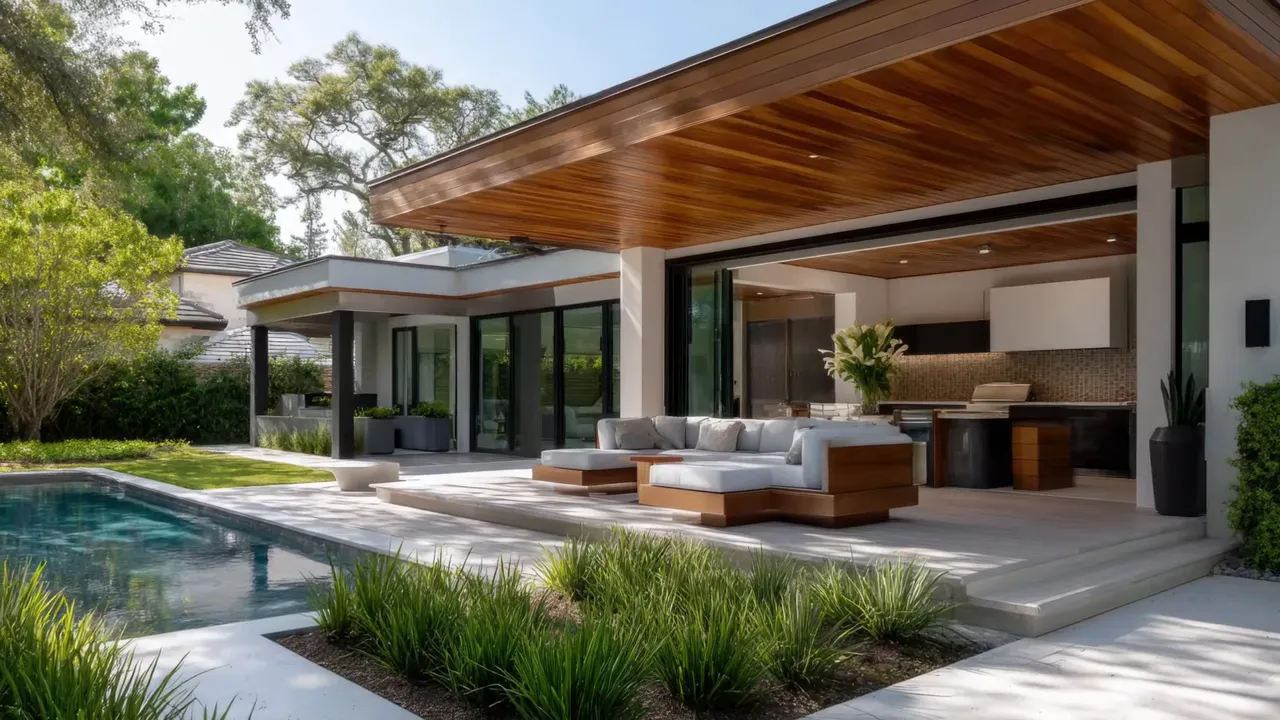
Outdoor decoration principles we follow:
- Use native and drought-tolerant plants for low maintenance and seasonal interest.
- Choose resilient materials for decking, seating, and outdoor kitchens to withstand weather.
- Define outdoor rooms with overhead structures and rugs so the space reads as intentional.
We treat the pool and surrounding deck as compositional elements in the decorative plan — their finishes, lighting, and orientation affect how the house is used throughout the day.
🌙 Exterior lighting: Nighttime decoration and atmosphere
Exterior lighting transforms a home after dark. Uplights that highlight stone textures, path lights for circulation, and subtle pool illumination create an evening composition that reads differently than daytime decoration.
Nighttime decoration considerations:
- Design layered lighting with uplights, downlights, and accent lights to sculpt the exterior.
- Use warm temperatures to create a welcoming ambiance.
- Control spill so light enhances architecture without creating glare.
We design exterior lighting as the final decorative layer that reconciles form and function, making the building expressive at all hours.
🔋 Sustainability and smart systems: Decoration with responsibility
Decoration in modern homes must include environmental performance. Solar panels, energy-efficient glazing, and home automation are integral to how we decorate today. These systems are functional but also shape material choices and spatial planning.
How sustainability informs decoration:
- Orient spaces to harness daylight and reduce artificial lighting needs.
- Specify high-performance glazing that preserves views while improving thermal comfort.
- Integrate renewable systems like rooftop solar so they become part of the architectural narrative rather than afterthoughts.
We treat sustainability as a design constraint that enhances decoration by forcing smarter material and form decisions.
🧭 Principles to apply: A practical decoration checklist
To translate these observations into action, we compiled a practical checklist that focuses on decoration decisions that matter most:
- Start with architecture — let the building massing and materials lead decoration choices.
- Control the palette — two dominant materials and a limited color range create cohesion.
- Layer textures — combine smooth and textured surfaces for visual interest without color saturation.
- Prioritize lighting — lighting is decoration; invest intentionally in fixtures and placement.
- Conceal clutter — integrated storage and hidden service rooms keep decorative surfaces clean.
- Value touchpoints — materials we handle daily should be durable and pleasant to the touch.
- Design transitions — ensure doors, glazing, and thresholds mediate between interior and exterior palettes.
- Plan for night — exterior lighting must be part of the decorative brief.
We recommend using this checklist at the schematic design stage so decoration and architecture evolve together rather than retrofitting one to suit the other.
🛠️ Budgeting decoration: Where to invest and where to economize
Deciding how much to spend on decoration requires strategic prioritization. We advise investing in items that are visually central, tactile, and used daily because they deliver long-term value.
Suggested spending split for decoration decisions:
- 30% Architecture and finishes — flooring, wall cladding, and fixed cabinetry that define character.
- 30% Core furniture and lighting — sectional, dining table, bed, primary fixtures.
- 20% Systems and integration — glazing, automation, and built-in appliances.
- 20% Accessories and landscaping — rugs, art, soft goods, and planting that complete the narrative.
We prioritize long-term value: invest where wear, daily interaction, and permanence demand it, and be more flexible with seasonal or easily replaced accessories.
🧩 Decoration mistakes to avoid
Common errors in contemporary decoration are easy to correct when identified early. We list the most frequent missteps and how to avoid them:
- Overloading the palette. Avoid introducing too many colors or materials that compete for attention.
- Ignoring scale. Too-small furniture in large spaces or oversized fixtures in intimate rooms break the visual balance.
- Underlighting. Flat lighting flattens even the best materials; plan multiple layers.
- Prioritizing trend over quality. Cheap trend pieces can age poorly; prefer a few on-trend accessories over low-quality major investments.
- Neglecting function. Decorative ideas that hinder daily use will be removed or covered up; always test for practicality.
We recommend mockups and material samples at full scale to validate decoration decisions before procurement.
📐 Decoration exercises to implement immediately
Here are three short exercises we use to refine decorative intent during design or renovation phases:
- Material board edit. Lay out all proposed materials together. Remove anything that competes with the main two textures.
- Lighting rehearsal. Simulate morning, afternoon, and evening lighting conditions with sample fixtures to see how decoration shifts across time.
- Furniture layout audit. Sketch seating zones and circulation paths; prioritize conversation and sightlines to views over decorative density.
These exercises reveal conflicts early and ensure decoration supports living patterns instead of dictating them.
📚 Examples of decoration choices that endure
Several decoration decisions in this residence deserve replication because they age well and remain visually relevant:
- Handless cabinetry — low visual noise and high durability.
- Waterfall island — sculptural and functional, it anchors both kitchen and social life.
- Large-format tiles — fewer grout lines, cleaner look, easier maintenance.
- Natural timber accents — introduce warmth and longevity in an otherwise neutral scheme.
- Integrated storage — keeps decorative surfaces clear and intentional.
We see these elements repeatedly across successful projects because they balance aesthetics with useability.
🔁 Decorating with flexibility: How to evolve a scheme
Decoration is not static. We design for layered change so interiors can adapt to life stages, evolving tastes, or new owners. Strategies include:
- Neutral base with accent flexibility — use rugs, art, and soft goods to introduce color that can be updated easily.
- Modular furniture — pieces that can be reconfigured or relocated as needs shift.
- Plug-and-play lighting — fixtures that can be swapped without major rewiring.
We plan decoration with a five- to ten-year horizon while allowing for short-term refreshes that keep the home current without replacing major elements.
🔍 Final reflections: How decoration defines experience
Decoration is most successful when it serves the way people live. This home models a quiet luxury where restraint, material quality, and spatial clarity create a sense of calm. Decoration here is not ornamental excess; it is the deliberate selection and arrangement of elements that make daily life more humane and beautiful.
When we approach decoration, we ask three core questions for every decision:
- Does this choice enhance the daily experience?
- Will it hold up physically and visually over time?
- Does it align with the architectural intention of the space?
Answering these questions ensures decoration remains purposeful, durable, and emotionally resonant.
📝 Practical next steps for your decoration project
If you are ready to apply these ideas, follow this short action plan:
- Define your architectural voice — decide the two primary materials and the dominant color temperature for lighting.
- Create a master finish palette — collect samples and commit to no more than five finishes for major surfaces.
- Plan storage first — integrate concealed storage so decorative surfaces remain minimally adorned.
- Choose one sculptural statement — a staircase, a fireplace, or an island that anchors the scheme.
- Mockup lighting and textiles at full scale to assess daylight and evening character.
We recommend completing these steps before purchasing major furniture or artwork so decoration evolves from the home's bones rather than dictating structural choices.
📸 Visual references and inspirations
Use visual references to communicate decoration intent to contractors, carpenters, and artisans. Capture images of material samples in the desired lighting and create a shared mood board to avoid misinterpretation.
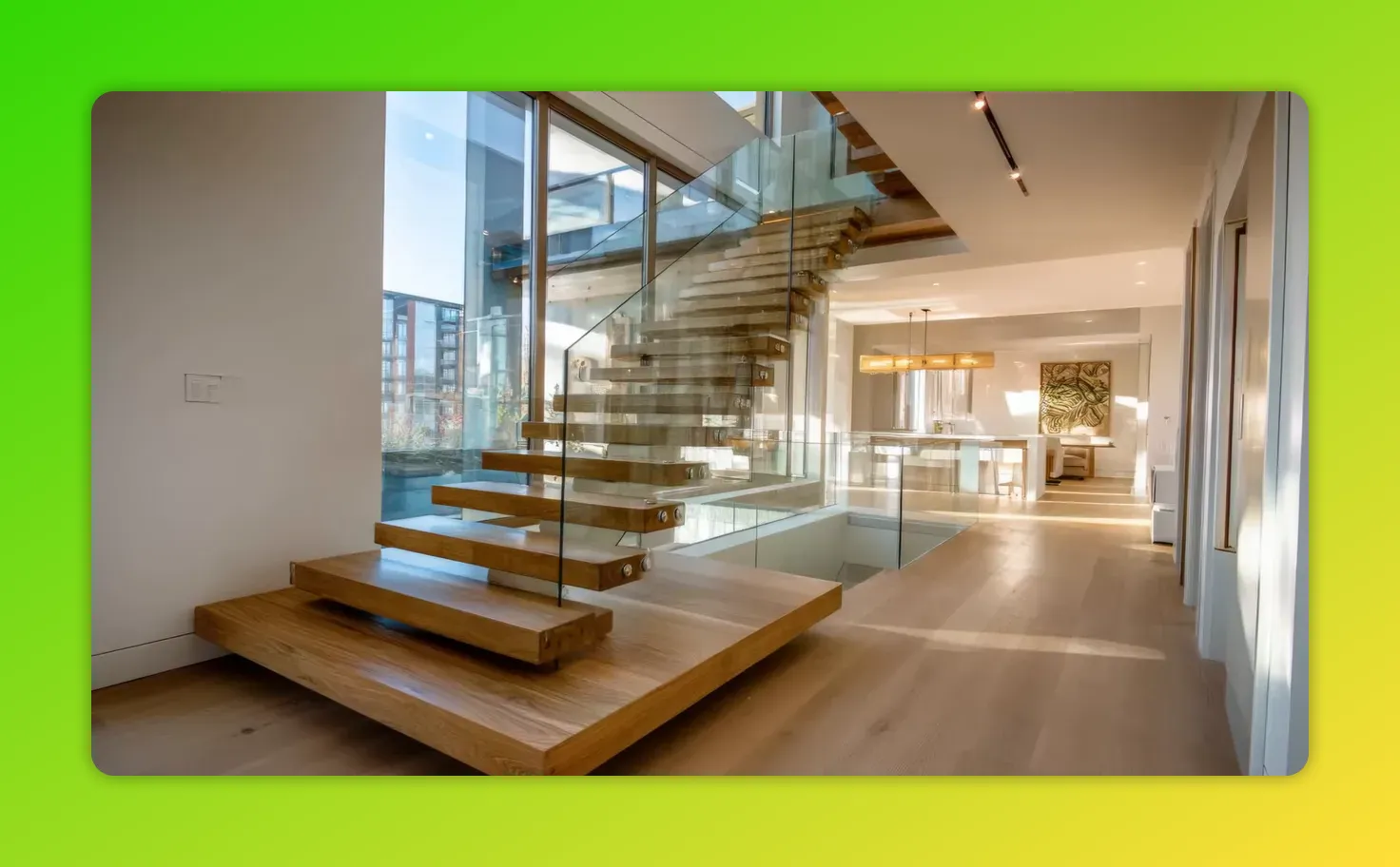
We find that physical samples and annotated photos reduce costly revisions and make the decoration process more collaborative.
🔧 Maintenance-minded decoration
Durability is central to considered decoration. Select finishes and fabrics that clean well and show less wear. For high-traffic zones, favor materials that age gracefully and can be restored rather than replaced.
Maintenance guidelines to include in your decoration brief:
- Choose stain-resistant upholstery for social areas.
- Specify sealers for stone and natural surfaces where needed.
- Plan service access to integrated systems so decorations do not obstruct repairs.
We always balance aesthetic ambition with the long-term realities of living and upkeep.
📦 Sourcing and procurement for decoration
Procurement can make or break the decorative vision. We recommend a staggered ordering approach that aligns deliveries with installation milestones.
Procurement tips:
- Order long-lead items early — custom cabinetry, stone slabs, and large fixtures often define timelines.
- Keep a reserve budget for finish upgrades discovered during mockups.
- Work with local artisans for custom joinery and furniture to ensure scale and finish accuracy in decoration.
We coordinate procurement and decoration decisions to avoid compromises caused by timing or availability.
📅 Timing your decoration: Phased delivery
Phasing decoration allows you to prioritize the most used spaces while leaving room to refine secondary areas. Begin with core living spaces, then move to private suites and utility rooms.
Phasing approach:
- Main living and kitchen
- Primary suite and wardrobe
- Outdoor living and pool area
- Guest suites and utilities
We phase so the home becomes usable and tasteful from day one while providing the flexibility to adjust secondary decorative choices as needs clarify.
📣 Final notes on decoration as investment
Decoration is an investment in daily life and property value. Thoughtful choices in materials, lighting, and storage increase utility and aesthetic longevity. When we design with restraint and clarity, decoration becomes an asset rather than a liability.
We encourage teams to document decisions, maintain a central sample library, and prioritize high-impact items early. These steps make decoration purposeful, measurable, and aligned with how the home will be inhabited.
🔗 Want to apply these decoration principles?
Use the checklist and exercises above as a roadmap. Start by defining your material palette and one sculptural element, then build storage and lighting systems that protect the decorative composition. Decoration should make life more graceful, not more complicated.
We look forward to helping projects that aim for quiet, lasting elegance rather than ephemeral trendiness.
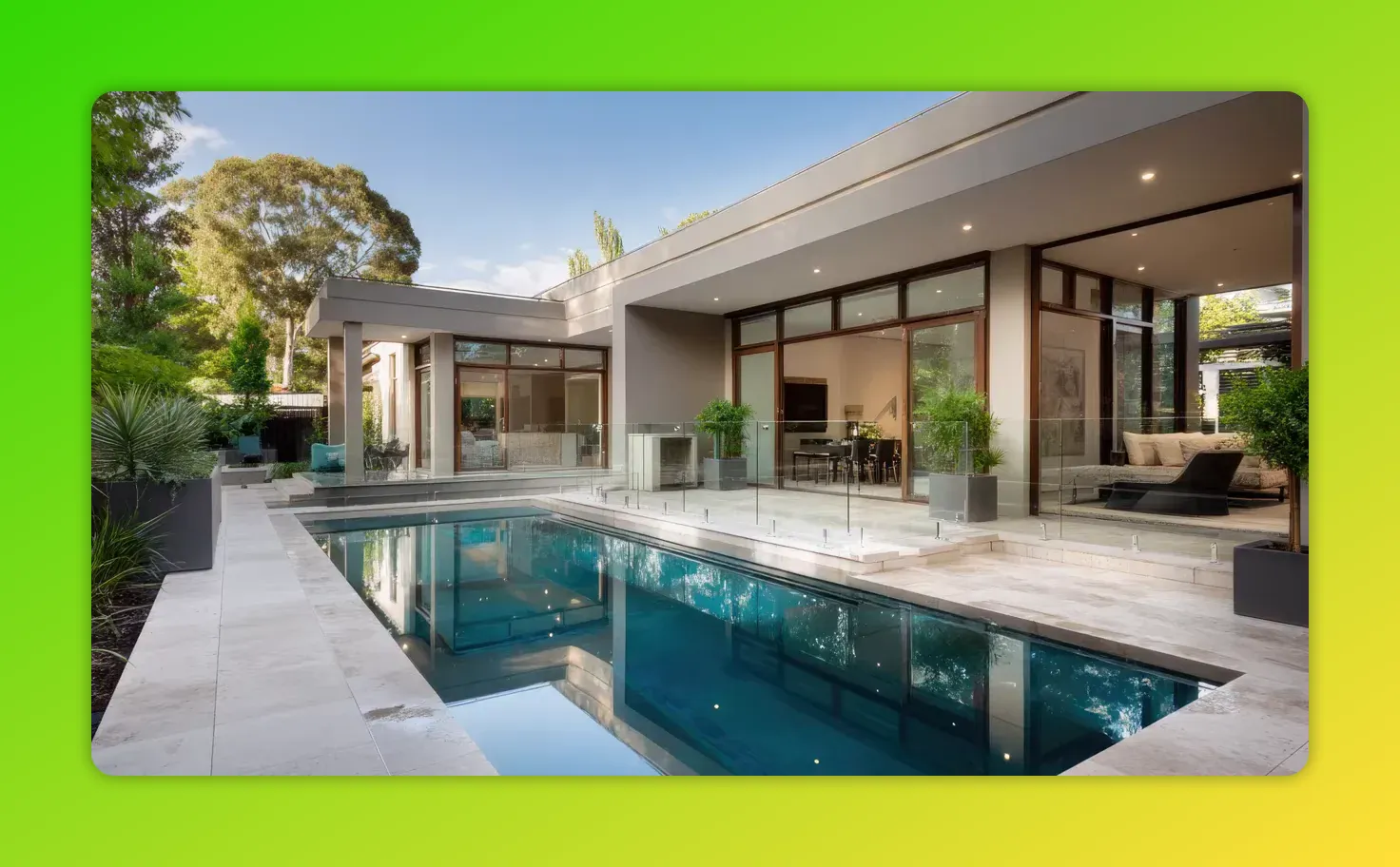
Decoration is the continuous act of curating how we live. When executed with discipline, it transforms a house into a composed home.
This Elegant Minimalist Home: Practical Decoration Strategies for Modern Luxury. There are any This Elegant Minimalist Home: Practical Decoration Strategies for Modern Luxury in here.

