Designing a Modern Luxury Home: Trends, Layouts, and Practical Steps for Inspired Living
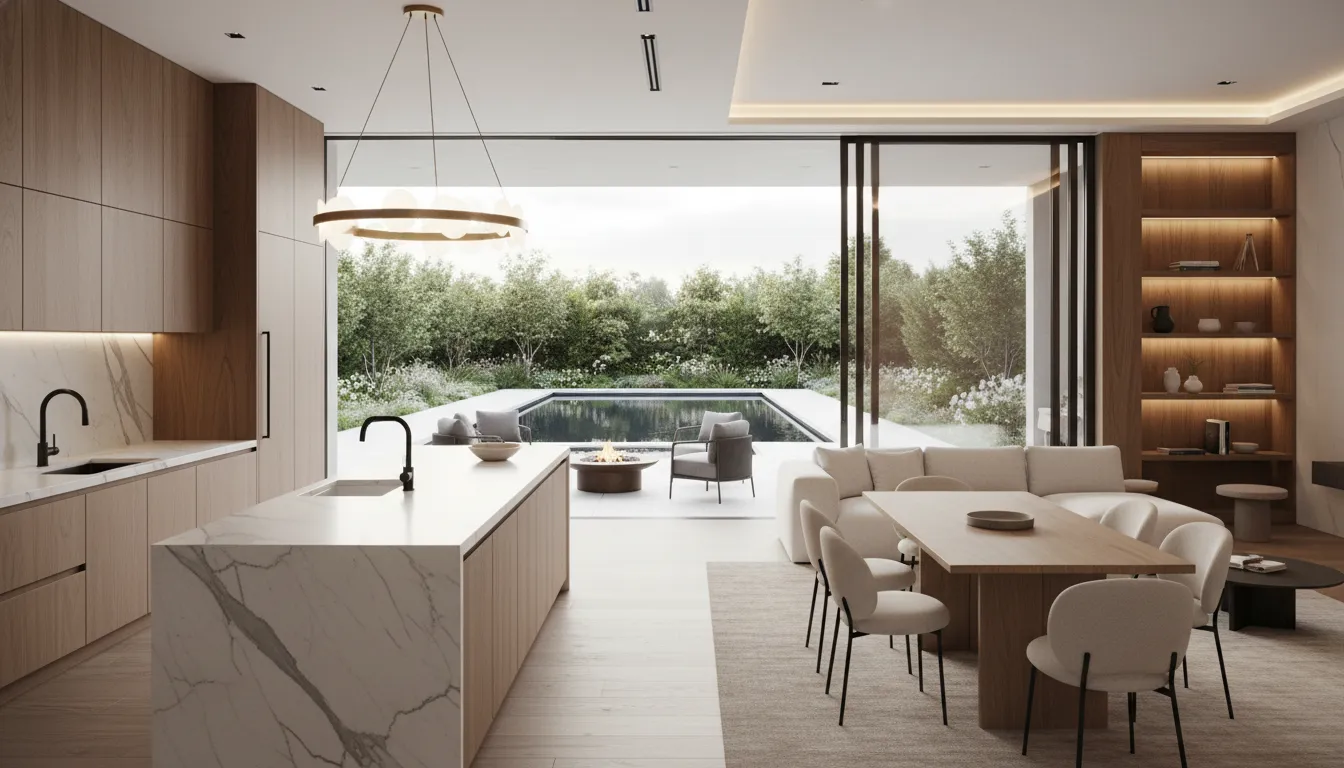
We believe a thoughtfully designed home elevates daily life. A modern luxury home blends refined materials, purposeful layout, and effortless indoor-outdoor connections to create spaces that feel calm, functional, and memorable. This article outlines the design principles, room-by-room approaches, finishes, lighting strategies, and smart-home integrations that define contemporary luxury. It also includes actionable guidance for translating inspiration into a real home upgrade or new build.
Table of Contents
- Key takeaways
- Why modern luxury matters for home life
- Signature spaces and what to prioritize
- 2026 design trends shaping luxury homes
- Material choices and finishes that read luxury
- Lighting: layering for mood and function
- Smart home integration without complexity
- Planning layout and flow for real living
- Furnishing and styling: restraint with intent
- Room-by-room checklist for a polished home
- Budgeting: where to spend and where to save in a home
- Procurement and sourcing strategies for a still-beautiful home
- Implementation: a realistic timeline for a whole home refresh
- Practical styling tips to make a home feel immediately luxurious
- Common pitfalls and how to avoid them in your home project
- Checklist: 20 actionable items to upgrade any home
- Financing and value considerations for a modern home
- Working with professionals to realize the home you want
- How to start: a simple three-step action plan for the home
- Maintaining luxury: operations and upkeep for the home
- What luxury will look like in the next five years
- Bringing it together
- Further resources and next steps
Key takeaways
- Open plans with defined zones create a comfortable flow in a modern luxury home.
- Invest in a few high-impact finishes—kitchen countertops, bathroom tile, and lighting fixtures—rather than trying to upgrade everything.
- Indoor-outdoor living is central: large glass transitions and outdoor rooms extend usable space.
- Smart home features should be integrated discreetly to enhance comfort and security without dominating aesthetics.
- Layered lighting and texture turn minimal architecture into warm, livable interiors.
Why modern luxury matters for home life
A modern luxury home is more than opulence. It is an intentional environment that supports how we live, work, and socialize. The best homes balance beauty with practicality, using restrained palettes, natural materials, and adaptable spaces that respond to changing needs.
When we design or refine a home, we aim for clarity of purpose. The kitchen functions as a social hub and chef workspace. The primary suite becomes a restorative retreat. Living areas encourage conversation and relaxation. Outdoor rooms extend the home’s daily footprint. Each space must feel proportionate to its purpose while contributing to an overall sense of cohesion.
Signature spaces and what to prioritize
The gourmet kitchen
The kitchen is often the most visible driver of value in a modern home. A luxury kitchen combines high-performance appliances, thoughtful storage, and an island that supports multiple uses: meal prep, casual dining, and socializing.
- Appliances: Choose professional-grade ranges, integrated refrigerators, and quiet dishwashers to support longevity and performance.
- Surfaces: Quartz, porcelain slabs, or honed stone for countertops keep the look clean while resisting wear.
- Storage systems: Deep drawers, pull-out pantry units, and dedicated appliance garages reduce clutter and make the kitchen feel larger.
- Lighting: Task lighting under cabinets, pendants over the island, and recessed ambient fixtures create a layered, useful environment.
Primary suites and spa bathrooms
The primary suite in a modern home is a private refuge. It should prioritize comfort, daylight, and storage, while the bathroom should read like a spa—calming materials, generous showers, and quality fixtures.
- Bedroom: Large windows, blackout treatments, and acoustics that limit noise make the suite restful.
- Closets: Walk-in closets with modular organizers make dressing effortless and preserve order in the bedroom.
- Bathrooms: Consider walk-in showers with linear drains, freestanding tubs where space allows, and double vanities with concealed storage.
Open living spaces and flexible zones
Modern luxury homes favor open-plan living, but that openness should be organized: zone seating, define paths, and use rugs, lighting, and furniture to create intimacy within large rooms. Flex rooms can adapt to a home office, media room, or guest suite as needs shift.
Outdoor living
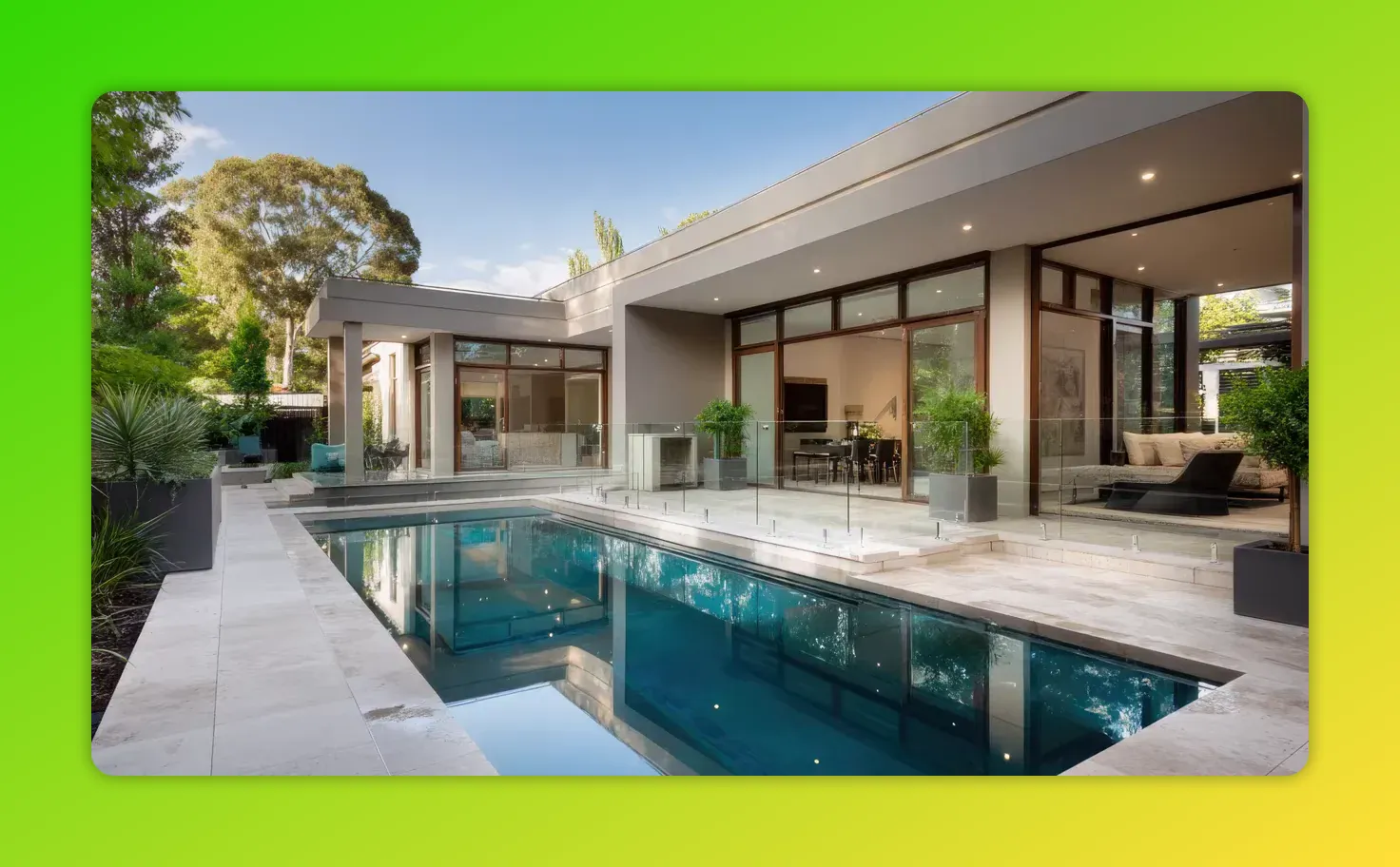
Outdoor rooms are an extension of the home. A well-designed patio, covered lounge, or landscaped backyard becomes usable year-round when paired with heating elements, shade structures, and weather-resistant furnishings.
- Seamless transitions: Operable glass walls or sliding doors create a visual and functional link between indoors and outdoors.
- Outdoor kitchens: Even a compact grilling station with refrigeration and storage elevates entertaining.
- Landscaping: Layered planting and lighting define outdoor rooms and provide privacy.
2026 design trends shaping luxury homes
Design trends evolve, but several key directions are shaping luxury homes for 2026 and beyond. These trends help prioritize investments that retain relevance and enhance daily living.
1. Quiet minimalism with tactile warmth
Minimal palettes—soft whites, warm greys, and muted earth tones—create calm. Texture becomes the primary source of interest: wood grain, matte plaster, and woven textiles add depth without visual clutter. In a home, this approach results in spaces that feel curated rather than cold.
2. Curved architecture and built-ins
Curves soften modern architecture and improve flow. Arched openings, rounded kitchen islands, and built-in window seating create comfortable moments throughout the home. Built-ins reduce the need for additional furniture and keep rooms looking tailored.
3. High-performance sustainability
Sustainable strategies are now table stakes in luxury home design. Energy-efficient glazing, improved insulation, photovoltaic integration, natural ventilation, and responsibly sourced materials reduce operating costs and support long-term value.
4. Technology, subtly embedded
Smart-home features are expected, but less visible. Integrated controls for lighting, shading, security, and HVAC should be intuitive and discreet. In a luxury home, the technology should enhance comfort without dominating aesthetics.
5. Personalized wellness spaces
Wellness rooms, saunas, and meditation nooks are appearing in more homes. These spaces are designed to support physical and mental health, integrating natural light, ventilation, and calming finishes.
Material choices and finishes that read luxury
Choosing finishes is where vision becomes tangible. When selecting materials for a home, prioritize permanence, texture, and craftsmanship. Here are the areas to allocate budget strategically.
Floors and base surfaces
Quality flooring sets the tone for the entire home. Wide-plank hardwood, large-format porcelain tile, and polished concrete are common choices. For durability in high-traffic zones, choose finishes that age gracefully.
Countertops and bathroom surfaces
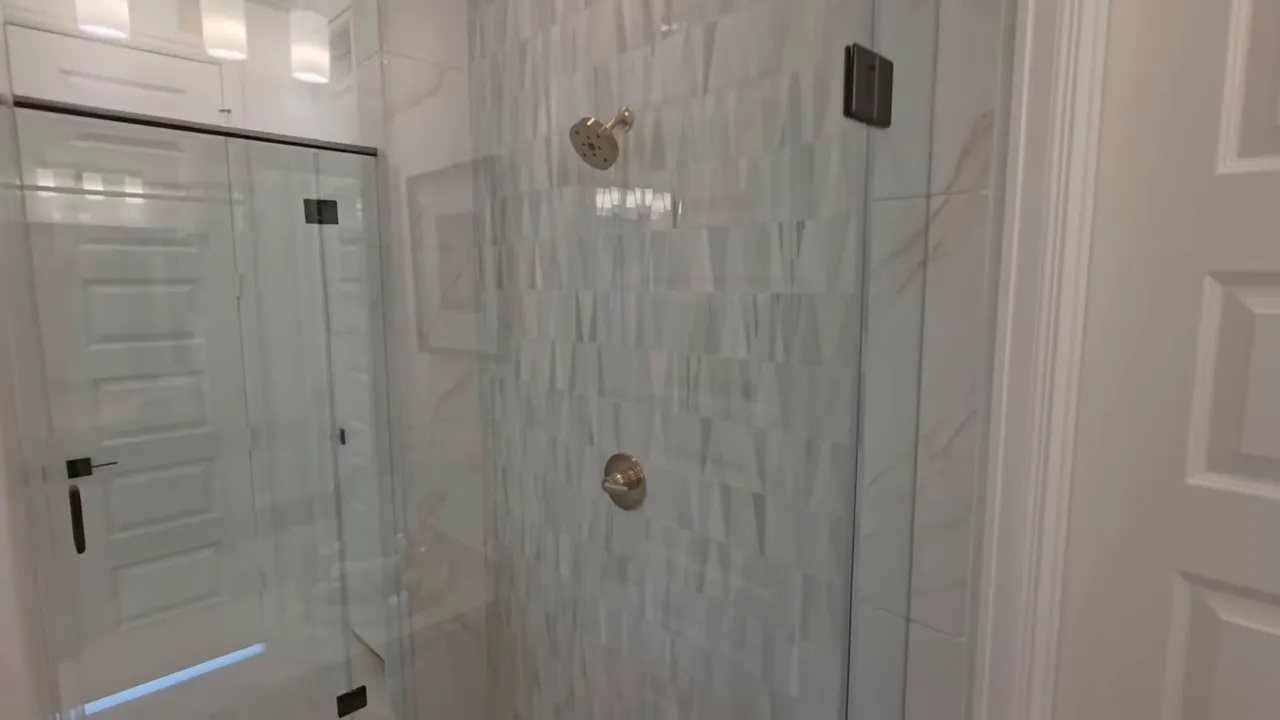
Invest in durable, low-maintenance countertops. Engineered stone surfaces provide consistency, while natural stone makes a statement. In bathrooms, large-format tiles with minimal grout lines read as luxurious and are easier to maintain.
Cabinetry and millwork
Custom cabinetry with soft-close hardware and integrated organizers elevates both kitchens and bathrooms. Flat-panel cabinetry in a matte finish reads modern, while subtle wood veneers add warmth in living areas.
Hardware and fixtures
Hardware is small but impactful. Choose coordinated finishes for faucets, cabinet pulls, and light switch plates. Brushed metals and matte black remain popular for their ability to complement a range of palettes.
Lighting: layering for mood and function
Lighting defines rooms. In a modern home, we layer ambient, task, and accent lighting to create comfort, drama, and usability. LED technology offers flexibility in color temperature and intensity without sacrificing energy efficiency.
- Ambient: Recessed fixtures and cove lighting provide general illumination.
- Task: Under-cabinet lights in kitchens and dedicated fixtures over work areas support daily activities.
- Accent: Wall sconces, picture lights, and track lighting highlight art and architectural features.
- Control: Dimmers, scene presets, and voice control let us tailor lighting to moments, from quiet evenings to full-house entertaining.
Smart home integration without complexity
A modern luxury home uses technology to simplify life. We prioritize systems that are reliable, user-friendly, and easily maintained by contractors and future homeowners.
- Core systems: HVAC zoning, whole-home audio, secure access, and lighting control form the backbone.
- Security: Integrated cameras, smart locks, and door sensors should be inconspicuous and monitored through a single app.
- Automation: Routine automations—morning lighting scenes, shading schedules, and climate setbacks—add convenience with minimal user input.
- Future-proofing: Wired backbone and expandable hubs allow new devices to be added without major rewiring.
Planning layout and flow for real living
Good layout anticipates how we move through a home. Efficiency, sightlines, and privacy are the three pillars we consider.
Efficiency
Locate high-use rooms near each other. Kitchens, pantries, and informal dining should connect to outdoor entertaining. Laundry rooms placed near bedrooms reduce daily friction.
Sightlines
Open views through a home create a sense of spaciousness. Align major sightlines to outdoor focal points. Use partial walls, bookcases, or screens to maintain openness while providing subtle separation.
Privacy
Buffer private bedrooms and home offices from noisy public areas. Use transitional spaces—mudrooms, corridors, and vestibules—to create a gradual move from public to private.
Furnishing and styling: restraint with intent
Furnishings in a luxury home should support lifestyle and highlight architecture. We favor fewer, better pieces over maximalist layouts. Textiles, lighting, and curated art bring personality without clutter.
- Scale: Ensure furniture proportions match room dimensions. Oversized sofas in small rooms make spaces feel cramped.
- Function: Choose multipurpose furniture where appropriate—console tables that become desks, benches with storage.
- Color: Use accent colors sparingly to preserve a calm foundation. A single saturated element—an armchair or a rug—can inject character.
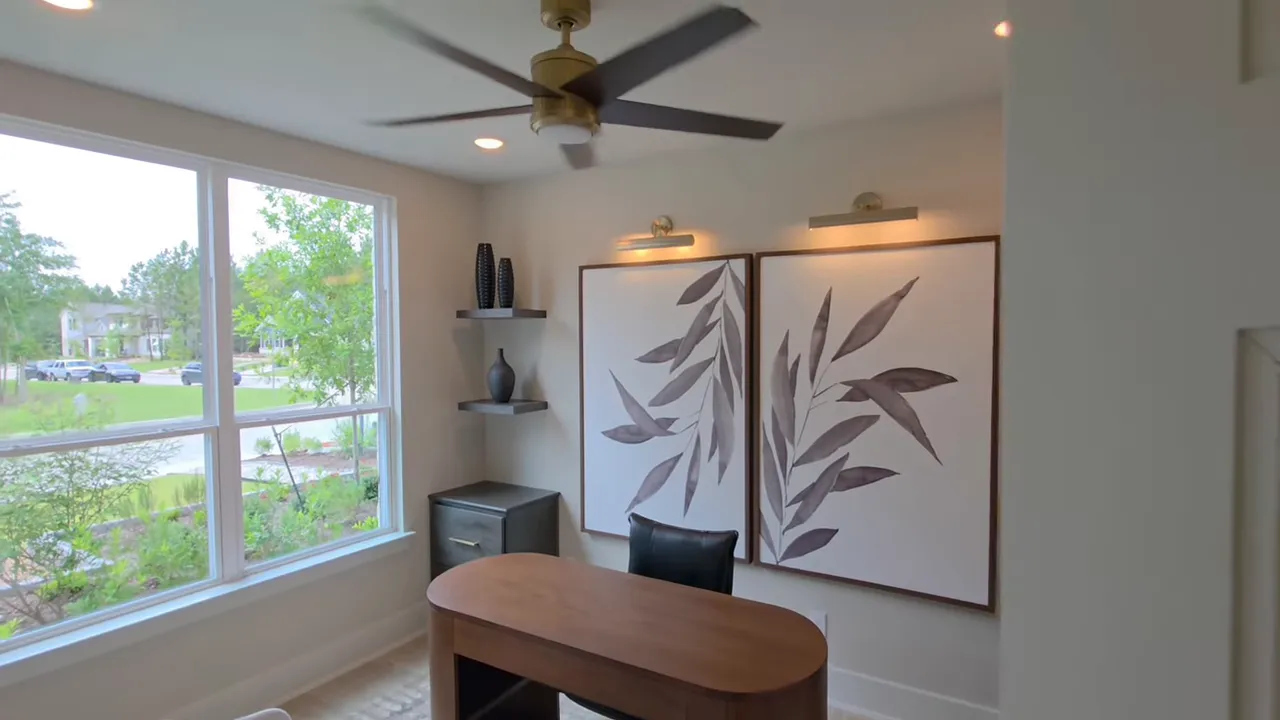
- Art and accessories: Larger scale art supports modern minimalism; groupings should breathe, not crowd.
Room-by-room checklist for a polished home
Use this checklist to evaluate each space in the home and decide where to focus time and budget.
Entry and foyer
- Define the entry with a clear path and a focal point such as a console, mirror, or sculptural light.
- Provide durable flooring that transitions well to the rest of the home.
- Include storage for shoes, outerwear, and incoming parcels.
Kitchen
- Confirm appliance layout supports cooking workflow: fridge, sink, stove triangle.
- Design an island with seating and storage; plan for plumbing and electrical as needed.
- Specify durable countertops and backsplash materials that are easy to maintain.
Living and dining
- Plan seating zones and circulation paths to support gatherings.
- Integrate media discreetly with cabinetry or wall niches.
- Layer lighting for different uses: dining, reading, ambient.
Primary suite
- Position the suite for privacy and daylight without direct street views.
- Include a comfortable walk-in closet with organized storage modules.
- Design the bathroom for long-term comfort with quality fixtures.
Secondary bedrooms and flex rooms
- Ensure bedrooms have adequate closet space and natural light.
- Use flex rooms to provide a home office, gym, or guest suite depending on needs.
Laundry and utility
- Provide counter space for folding and storage for supplies.
- Locate close to bedrooms or primary circulation routes for convenience.
Outdoor areas
- Plan for weather protection: pergolas, covered patios, or retractable awnings.
- Include zones for dining, lounging, and active uses.
- Specify durable outdoor materials and furniture that align with the interior palette.
Budgeting: where to spend and where to save in a home
Budgets vary, but allocating resources strategically increases long-term satisfaction in a home. Here is a general prioritization to guide decisions.
Spend on:
- Structural quality: Proper insulation, roof, and windows protect the home and reduce operating costs.
- Major finishes: Kitchen countertops, primary bathroom tiles, and hardwood flooring are hard to change later.
- Lighting and electrical: Flexible circuits, dimmers, and good-quality fixtures support future needs.
- Wellness and comfort: HVAC zoning, acoustical treatments, and water filtration pay off daily.
Save on:
- Decorative accessories: Rugs, cushions, and art can be refreshed affordably.
- Entry-level furniture: Use pieces that can be upgraded over time rather than base every room on costly purchases up front.
Procurement and sourcing strategies for a still-beautiful home
Delivering a cohesive home requires staging decisions and efficient procurement. We recommend a phased approach to sourcing to balance quality and timing.
Phase 1: Core contractors and systems
Lock in structural trades, HVAC, electrical, and plumbing. These systems determine what is possible for finishes and technology later on.
Phase 2: Major finishes and custom millwork
Order kitchen cabinetry, custom closets, and bathroom vanities early. Lead times can push schedules, and installing these before final paint avoids damage.
Phase 3: Furnishings and soft goods
Schedule upholstery and rugs after paint and flooring are completed. This ensures color and scale decisions are informed by the finished surfaces in the home.
Implementation: a realistic timeline for a whole home refresh
Whether building new or renovating, a realistic timeline keeps the project on track and reduces stress.
- Planning and design — 4 to 8 weeks: Concept, schematic plans, and budgeting.
- Permitting and procurement — 2 to 12 weeks: Permits and ordering long-lead items.
- Construction — 8 to 24 weeks: Structural work, systems, and finishes depending on scope.
- Furnishings and styling — 2 to 8 weeks: Delivery and installation of furniture and accessories.
Practical styling tips to make a home feel immediately luxurious
We can transform a home’s perceived luxury with thoughtful styling and small investments. These tactics are easy wins:
- Declutter: Clear surfaces reveal architecture and finishes. Less is often more.
- Scale artwork: Oversized art or large groupings create a curated gallery feel in a home.
- Layer textiles: A mix of textures in throws, pillows, and rugs adds tactile richness to living spaces and bedrooms.
- Greenery: A few well-placed plants enliven a home and improve air quality.
- Rotate accessories seasonally: Small changes keep a home feeling fresh without large expense.
Common pitfalls and how to avoid them in your home project
Avoiding common mistakes helps a home project stay on time and budget. Here are pitfalls we frequently see and how to sidestep them.
Underestimating timelines
Lead times for appliances, custom cabinetry, and specialty finishes can extend schedules. Build buffer time into the plan and order long-lead items early.
Over-personalizing early
Making bold, permanent choices early—such as saturated wall colors or highly specific fixtures—can limit future flexibility in the home. Reserve a few versatile elements that can adapt as tastes evolve.
Neglecting storage
Storage is the backbone of a functional home. Incorporate concealed storage and built-ins to preserve clean sightlines and reduce clutter.
Checklist: 20 actionable items to upgrade any home
- Audit the circulation paths in your home and remove obstacles.
- Identify one high-impact surface to upgrade—countertop, floor, or backsplash.
- Install dimmers on primary lighting circuits for flexible ambiance.
- Upgrade door hardware and cabinet pulls to coordinated finishes.
- Choose a neutral paint palette and add color with textiles.
- Replace cheap window coverings with layered treatments: blinds plus drapes.
- Integrate at least one statement lighting fixture in a main room.
- Reorganize closets with modular systems for better long-term function.
- Install quality faucets and showerheads to improve daily rituals.
- Replace worn rugs with appropriately scaled new pieces.
- Landscape for privacy and outdoor definition.
- Designate a well-lit workspace with sufficient outlets and storage.
- Invest in one durable furniture piece that will anchor a living area.
- Install automated shades or smart controls for convenience.
- Plan for sound control in media areas with acoustic panels or soft finishes.
- Add visual continuity with repeated materials or colors across rooms.
- Use under-cabinet lighting in kitchens for both task and mood.
- Keep a running maintenance budget for seasonal home care.
- Curate art and objects with restraint for a cohesive look.
- Test smart-home workflows before committing to wide deployment.
Financing and value considerations for a modern home
Design decisions should align with market expectations if resale value is a concern. Neutral palettes, quality systems, and well-executed layouts tend to preserve or increase value across neighborhoods.
When financing improvements, prioritize investments that improve livability and reduce operating costs—insulation, glazing, HVAC efficiency, and durable finishes. These choices have measurable returns in comfort and utility savings for the home.
Working with professionals to realize the home you want
Engage the right team early. Architects and experienced designers translate lifestyle goals into a clear plan. Reliable contractors execute details and manage schedule complexities.
- Designer or architect: Clarifies the vision and produces usable drawings.
- General contractor: Coordinates trades and keeps the project on schedule.
- Specialists: Landscape designers, lighting consultants, and AV integrators enhance specific systems in the home.
How to start: a simple three-step action plan for the home
Begin with a focused approach to make progress without overwhelm.
- Define priorities: Identify the top three pain points or highest-impact upgrades for the home.
- Set a realistic budget and timeline: Include contingencies for unexpected items that arise during renovation.
- Assemble the core team: Hire an architect or designer and a contractor to produce a project plan.
Maintaining luxury: operations and upkeep for the home
Ongoing care keeps a home feeling new. Create a simple maintenance calendar to manage seasonal tasks, filter changes, and systems checks.
- Quarterly: Inspect HVAC filters, clean range hood filters, and test smoke detectors.
- Semi-annually: Deep clean carpets, check window seals, and service appliances as recommended.
- Annually: Schedule HVAC servicing, gutter cleaning, and exterior paint touch-ups where needed.
What luxury will look like in the next five years
We expect homes to become more responsive, resilient, and human-centered. The emphasis will shift further toward adaptable spaces, circular material systems, and technology that supports wellness without detracting from the home’s design integrity.
Futures where homes are energy-positive, where interiors evolve with modular furnishings, and where technology anticipates needs rather than interrupts them are already beginning to influence today’s decisions. Designing a home with these trajectories in mind protects value and enhances daily life.
Bringing it together
Designing or upgrading a modern luxury home is a balance of vision, prioritized investment, and practical execution. Focus on durability, comfort, and seamless indoor-outdoor relationships. Layer lighting, texture, and quality finishes to create spaces that feel curated and livable.
We recommend starting small: choose one room to upgrade with a strategy that aligns finishes, lighting, and layout. Once that room succeeds, the approach becomes replicable across the home. With measured decisions and a capable team, any house can evolve into a home that supports daily life and long-term value.
Further resources and next steps
For project planning, keep a running inspiration folder with images and notes from spaces that feel right for your home. Ask trades for references and recent examples of finished work. When selecting finishes, order samples and live with them in natural light to ensure they meet expectations.
We are available to help with design questions and practical advice as projects move from idea to reality. Thoughtful planning and selective investments will deliver a home that is both luxurious and enduring.
Open Concept Kitchen Living Room Ideas for a Seamless Home
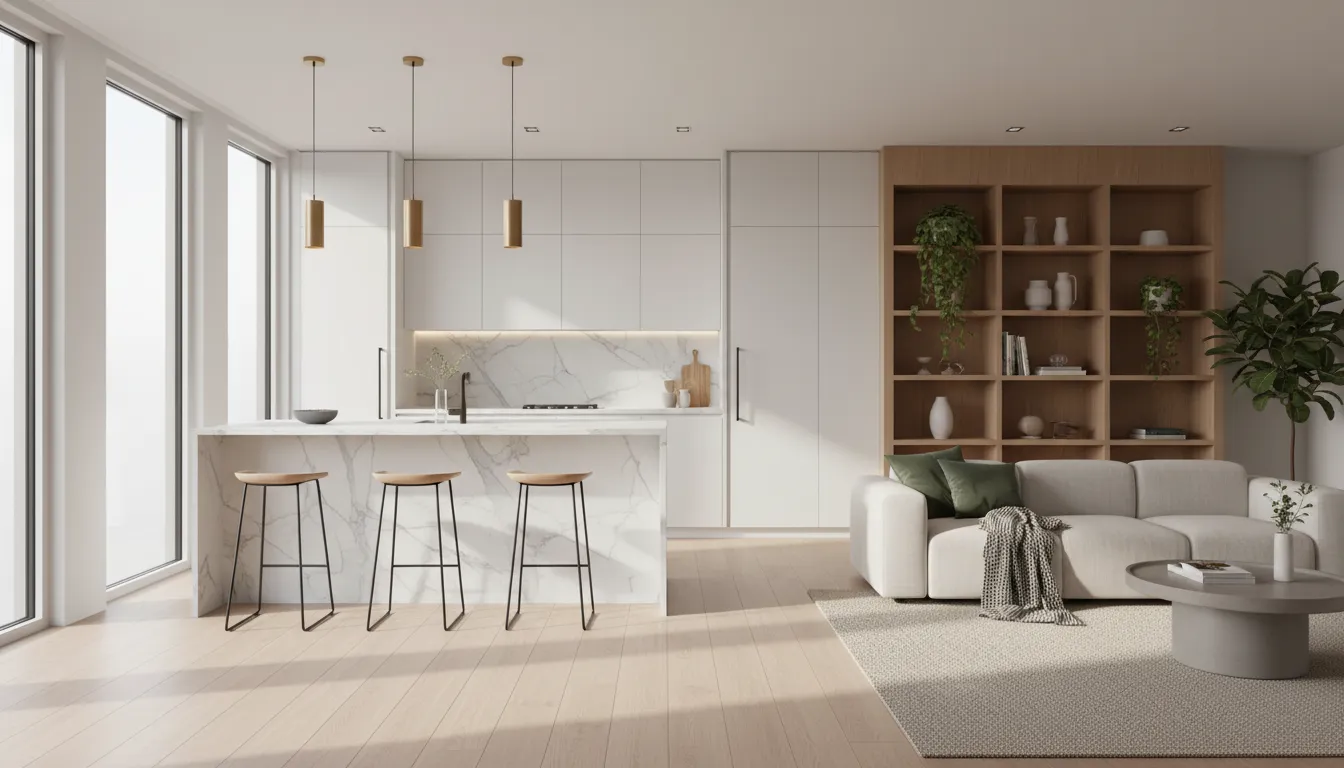
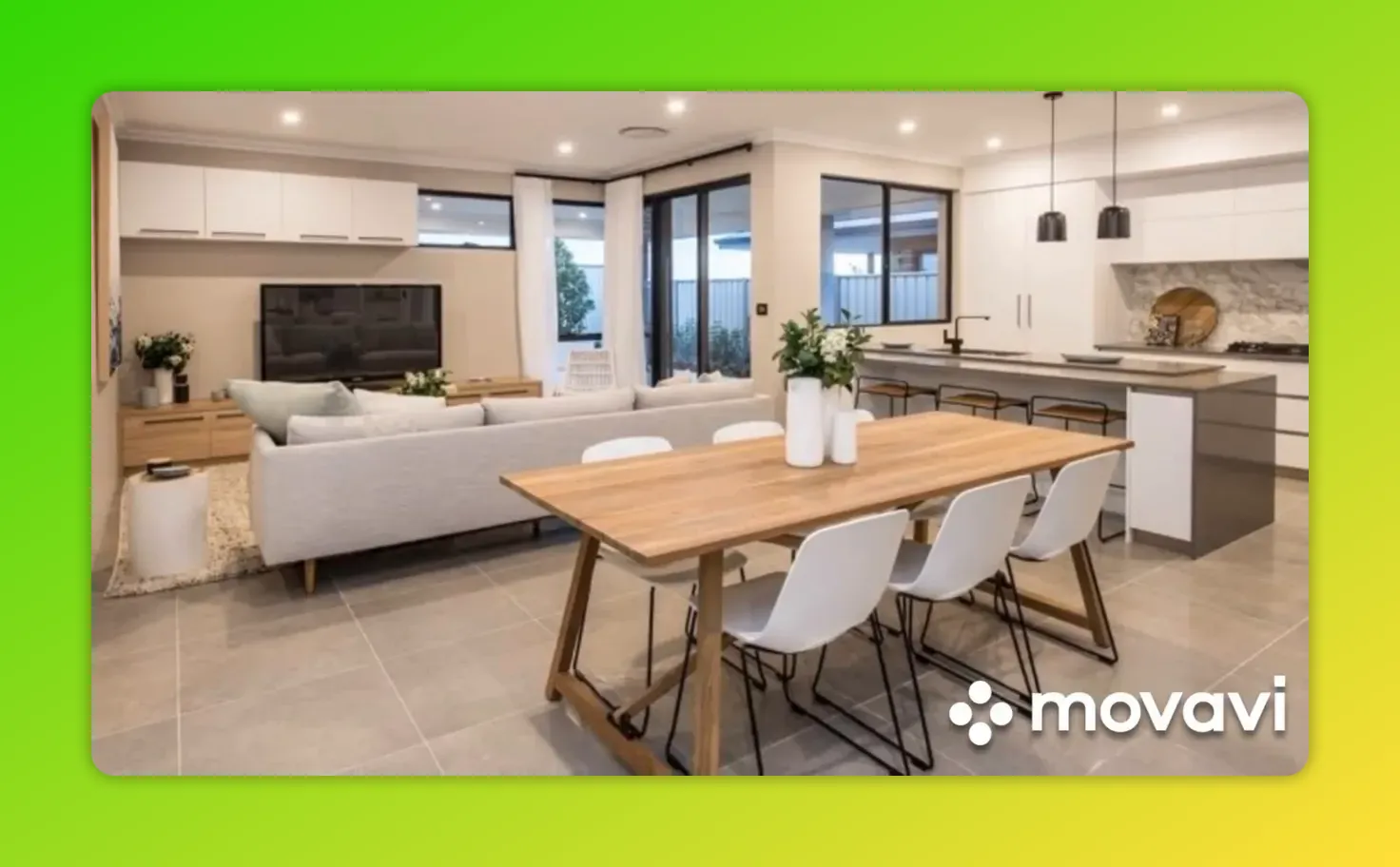
Open layouts make a home feel bigger, brighter, and more connected—if we get a few fundamentals right. Whether we’re renovating an older house or building new, the goal is the same: create a space that functions for everyday life and looks like it belongs in a design magazine. Below are practical, energetic strategies to turn an oversized, divided area into a cohesive, stylish home.
Table of Contents
- Layout and traffic flow 🚶
- Color and cohesion 🎨
- Lighting layers 💡
- Flooring: the invisible wall 🪵
- Design checklist: quick wins ✅
- Make it yours — next steps ✨
Layout and traffic flow 🚶
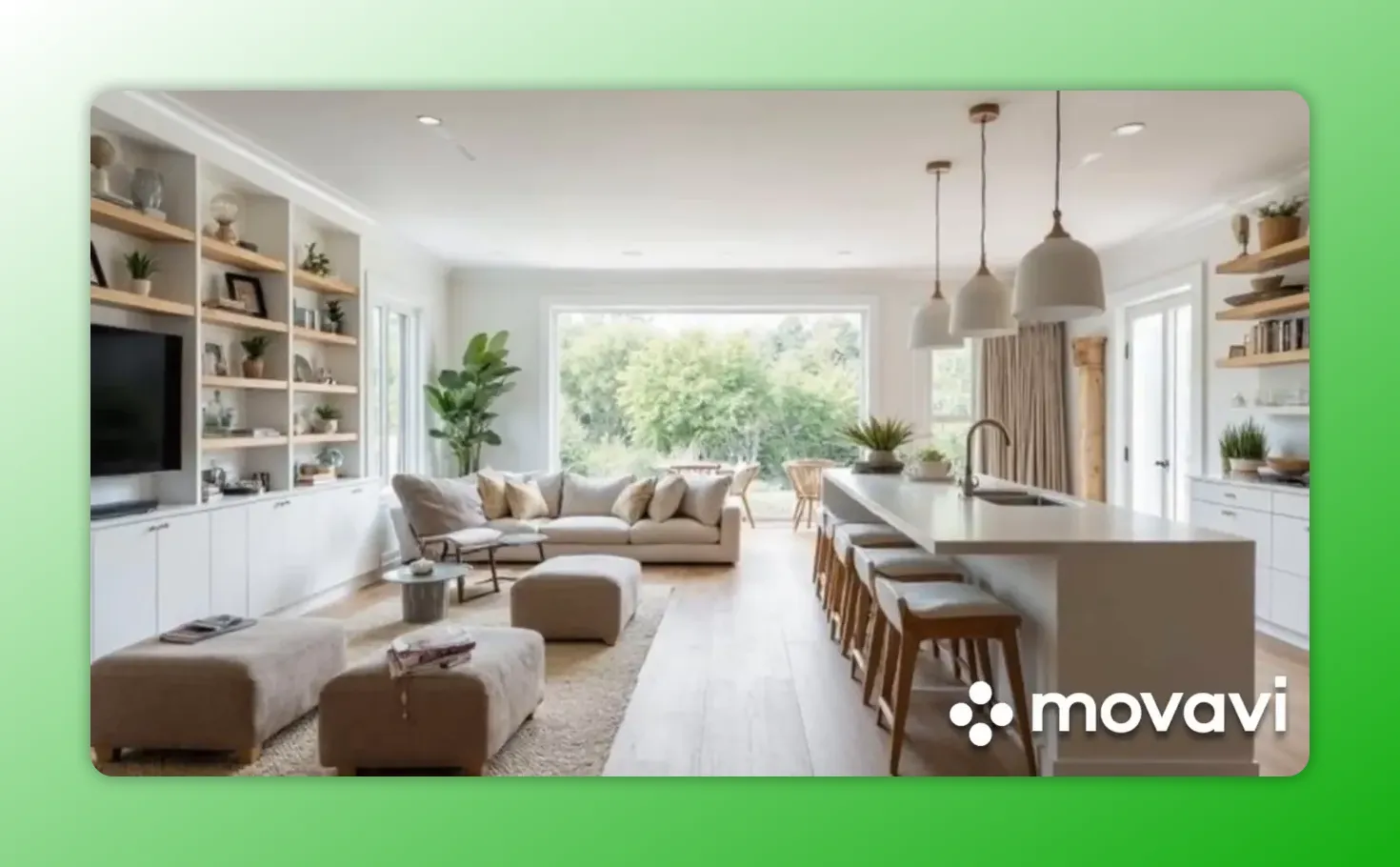
Move through the space like you actually live in it. The number one misstep is placing furniture that interrupts natural paths. We map the room in zones: a working zone for the kitchen and a relaxation zone for the living area. That simple mindset keeps the home organized and intuitive.
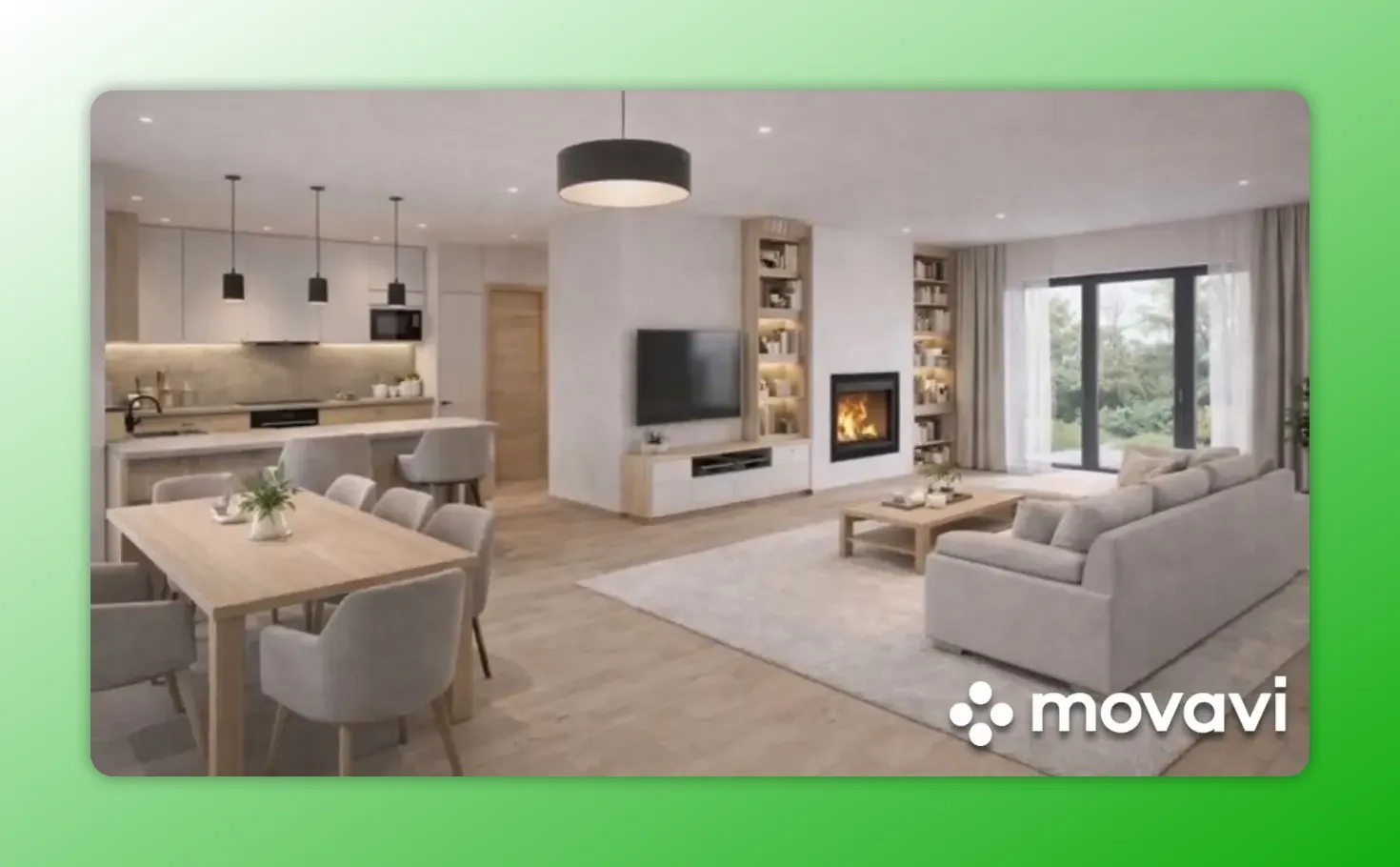
A large kitchen island is our favorite tool. It acts as a functional divider without blocking sightlines. With an island, we define the kitchen footprint, add prep and storage, and still stay part of conversations happening on the sofa. Think of it as the social backbone of the home.
Color and cohesion 🎨
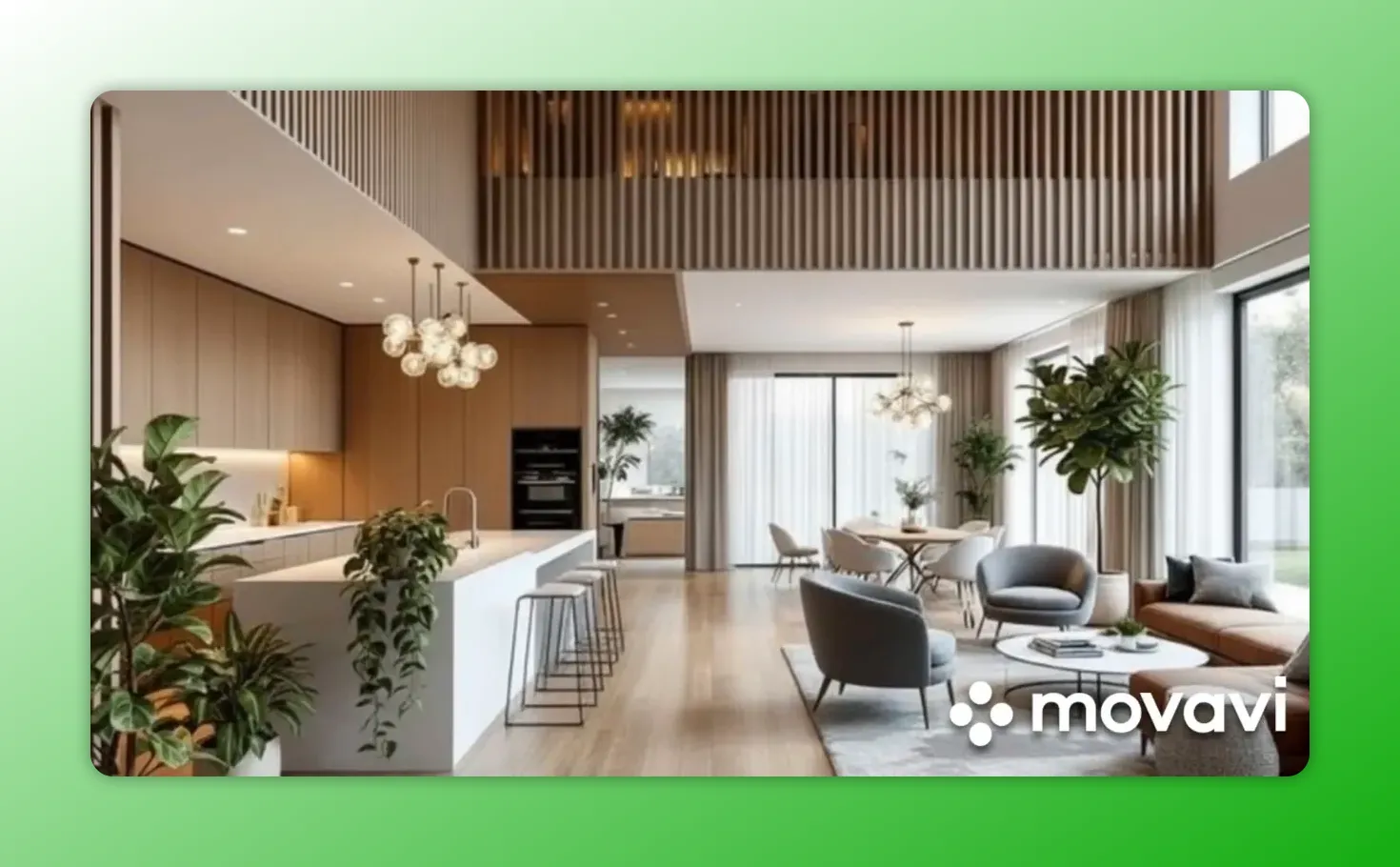
To make the whole home read as one space, we build a cohesive color story. Start with a neutral foundation on walls and major furnishings—soft whites, light grays, or warm beiges work beautifully. Then layer in two or three accent colors and repeat them across both zones.
- Foundation: Neutral walls and large pieces to create calm.
- Accents: Choose 2–3 colors like deep navy and warm copper and sprinkle them across pillows, rugs, and accessories.
- Undertones: Keep undertones consistent so warm greys don't clash with cool whites.
Lighting layers 💡
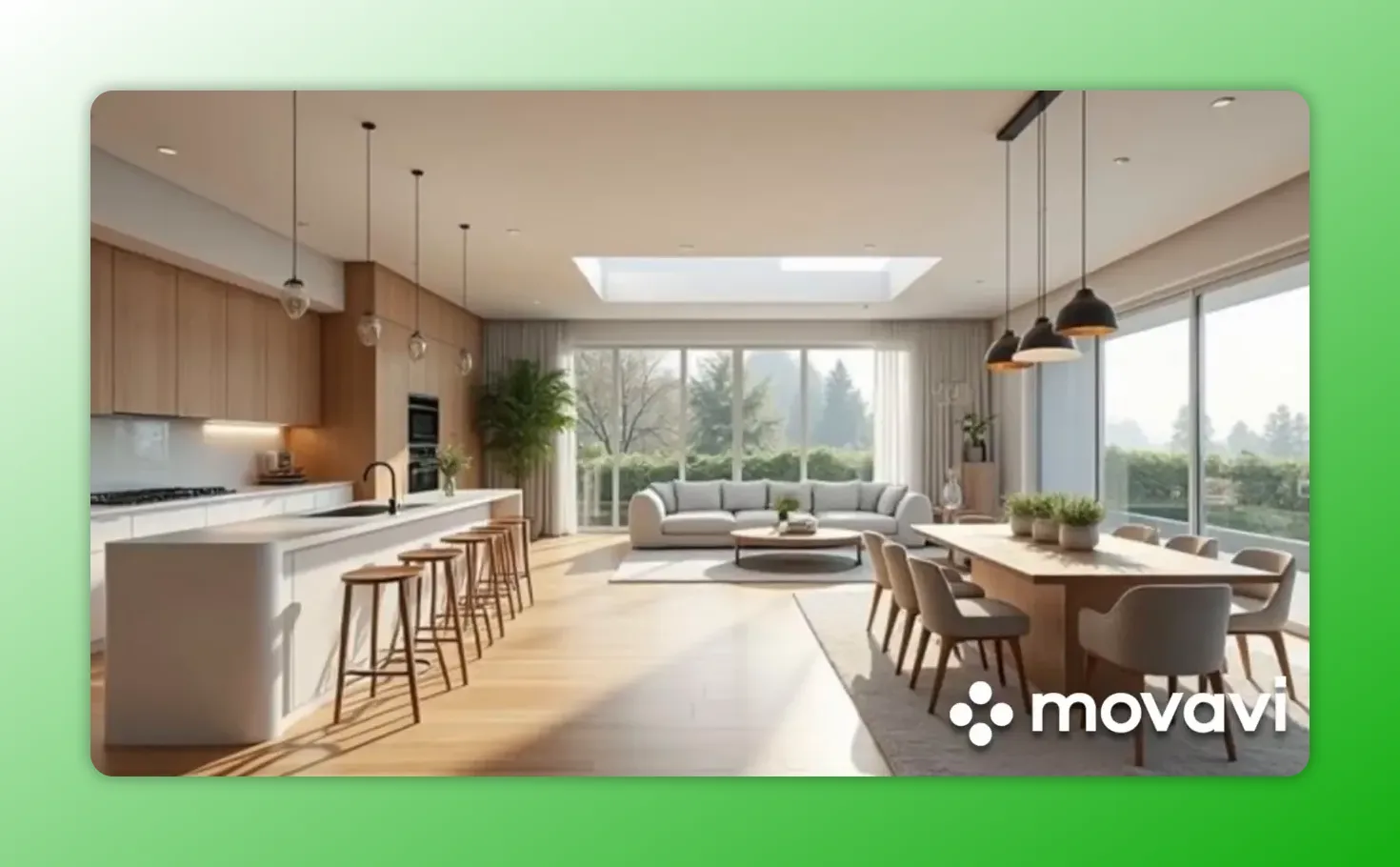
One giant room needs layered lighting. We rely on three types to add depth and functionality:
- Task lighting for bright, focused light over counters and the stove so cooking is safe and painless.
- Statement lighting like pendant lights over the island or a chandelier above a dining area to anchor the space visually.
- Ambient lighting using floor lamps or recessed lights on dimmers for a warm, relaxing vibe at night.
Mix levels so the home feels flexible: bright for meal prep, cozy for movie nights, and dramatic for dinner parties.
Flooring: the invisible wall 🪵
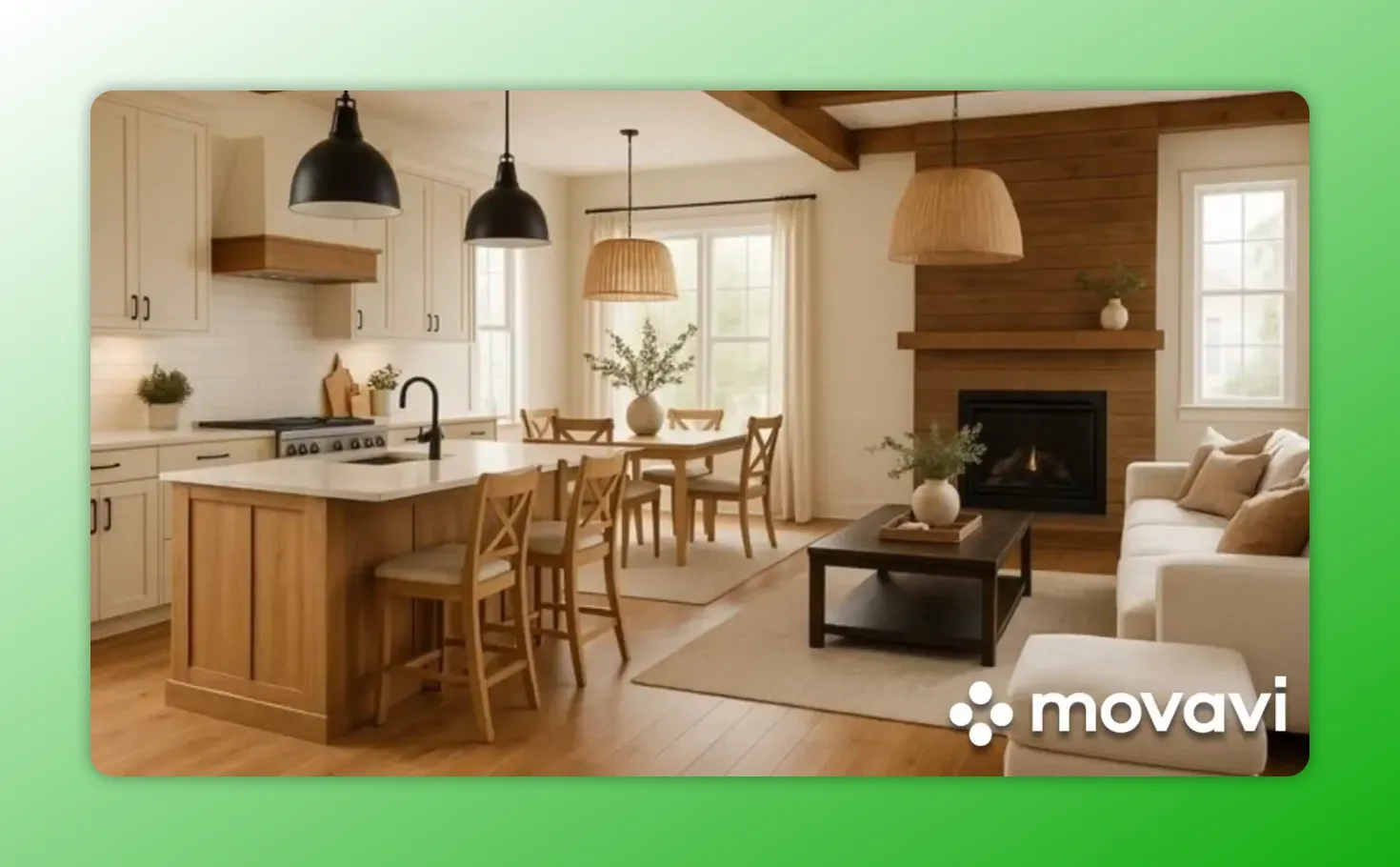
Changing flooring mid-room acts like an invisible wall. To keep the home visually open, run the same flooring—hardwood or luxury vinyl plank—throughout the entire space. This single move instantly makes a smaller open concept feel larger and more cohesive.
If you need durable surfaces near the sink, choose a continuous material designed for the whole area so you don’t break the flow.
Design checklist: quick wins ✅
- Map circulation: Ensure a clear path from entry to kitchen without furniture bottlenecks.
- Define zones with an island, rugs, or furniture arrangements rather than walls.
- Repeat color accents across both areas to visually connect the home.
- Layer lighting—task, statement, ambient—for full control of mood and function.
- Use continuous flooring to maintain visual flow and make the home appear larger.
Make it yours — next steps ✨
We can transform any home into a seamless, stylish living environment by planning for how we move, see, and use the space. Start with the layout, pick a cohesive palette, lock in layered lighting, and run one floor throughout. These moves are high-impact and budget-friendly when prioritized.
Ready to refresh the heart of your home? Grab a notepad, sketch your zones, and pick one change to make this weekend. Small shifts lead to huge results.
Open Concept Kitchen Living Room Ideas for Seamless Decoration and Stylish Flow
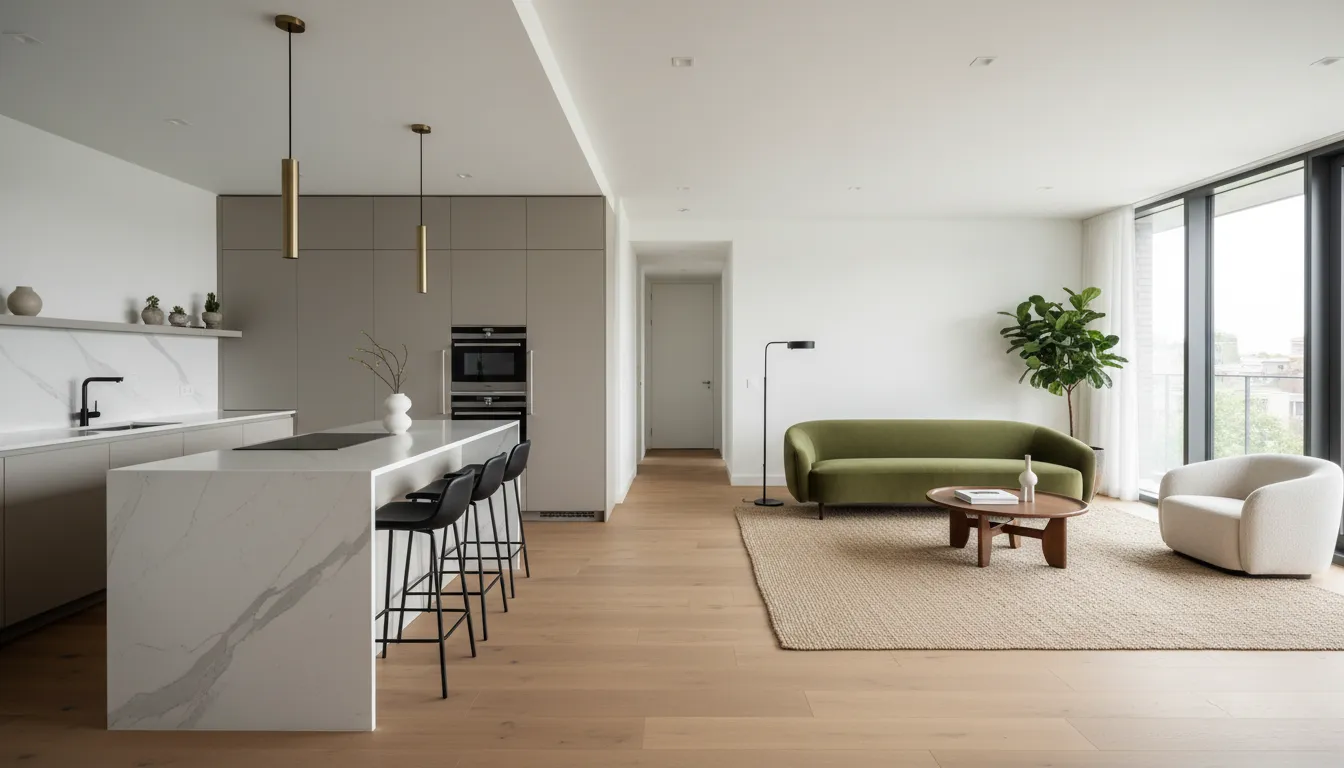
Open concept living offers an opportunity to create a single, cohesive environment where cooking, entertaining, and relaxing happen without barriers. Successful open plan decoration depends on planning movement, visual continuity, and layered lighting. In this guide we break down practical strategies to design an open kitchen and living room that feels deliberate, functional, and beautiful.
Table of Contents
- Layout and traffic flow 🛋️
- Color and cohesive palette 🎨
- Lighting strategy: layers and function 💡
- Flooring and visual continuity 🪵
- Furniture, scale, and zoning 🪑
- Styling and accessories: small choices that feel intentional 🧩
- Materials and finishes that work together 🔧
- Practical considerations: storage, acoustics, and maintenance 🧰
- Quick wins for renovating or staging an open concept ✅
- Putting the plan into action: a practical checklist 📝
- Final thoughts on durable style and long-term value 💼
Layout and traffic flow 🛋️
The foundation of any high-performing open plan is traffic flow. When we design the layout, our first priority is to ensure clear movement from entry points to the kitchen and living areas. Avoid forcing circulation through seating arrangements or across high-traffic zones.
Think of the space in functional zones: the kitchen as the working zone and the living area as the relaxation zone. Zoning helps us place furniture intentionally so pathways remain open and unobstructed.
- Define a main circulation path. Plan a straight, unobstructed route from the doorway to the kitchen work triangle. This prevents accidental congestion when multiple people are moving through the room.
- Use furniture to shape movement. Arrange sofas, console tables, or rugs to subtly guide movement without creating a barrier.
- Establish clear service access. Keep pantry doors, fridge access, and trash zones on the cooking side of the island to avoid cross-traffic through seating areas.
A kitchen island is one of the most powerful tools for zoning. A large island acts as a functional divider rather than a physical wall: it defines the kitchen space, stores essentials, and allows us to work while remaining part of conversation in the living area. An island also provides staging for serving, homework, and casual dining, so we can layer use without sacrificing openness.
Color and cohesive palette 🎨
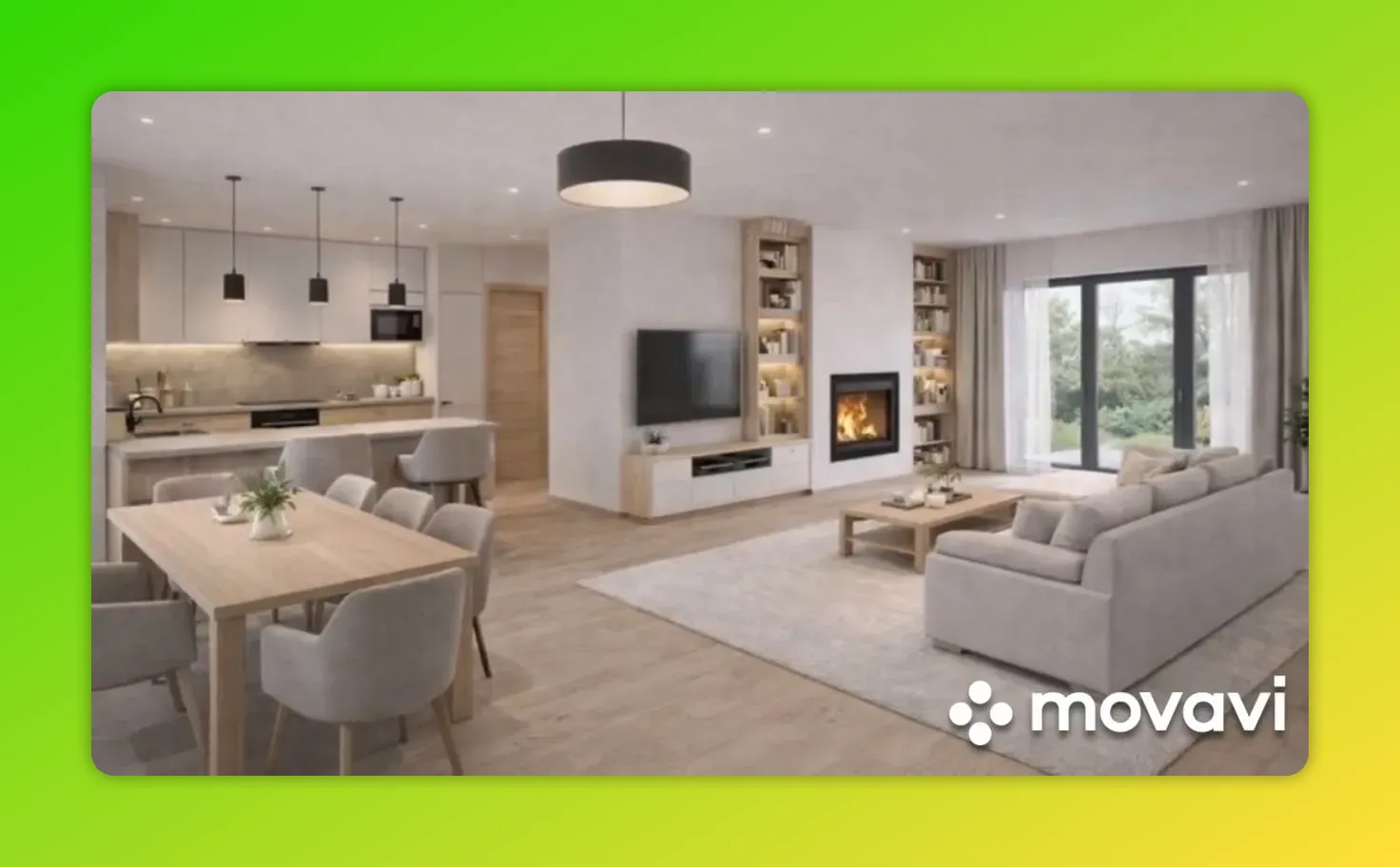
A cohesive color strategy is essential for a seamless look. We want the two main spaces to feel like chapters of the same story, not competing scenes. That requires consistent undertones rather than identical hues across surfaces.
Start with a neutral foundation on walls and large pieces. Soft whites, warm beiges, or light grays create a calm backdrop and maximize perceived space. From there we introduce decoration accents—two or three colors that repeat across both zones to visually tie everything together.
- Choose consistent undertones. If your foundation is warm (cream, warm white), select accent colors with warm undertones. If your foundation is cool (light gray), the accents should lean cool as well.
- Pick two to three accent colors. For example, deep navy and warm copper are one effective combination. Use navy throw pillows, a navy rug, and copper hardware or light fixtures to echo color across the plan.
- Use texture as a color companion. Natural wood, woven textiles, and metal finishes support color choices and make the scheme feel layered and intentional.
We should also use decoration elements—artwork, cushions, ceramics—to repeat accent colors at eye level and ground level. Visual repetition across zones is what converts two rooms into one unified space.
Lighting strategy: layers and function 💡
Lighting defines mood, function, and focal points. In a large open room a single central fixture is not enough. We design three primary layers of light to create depth and flexibility.
- Task lighting: Bright, direct lighting for food prep and cooking. Under-cabinet strips, recessed lights above counters, and focused pendants over work surfaces are critical.
- Statement lighting: Pendants above the island or a chandelier over a dining table create visual anchors. These pieces act as sculptural elements that draw the eye and set tone.
- Ambient lighting: Soft, warm illumination for the living area to support relaxation. Floor lamps, wall sconces, and dimmable recessed lighting give us control of atmosphere.
Practical tips:
- Layer across zones. Use a mix of recessed downlights for general illumination and warmer lamps for seating pockets.
- Add dimmers. Dimmers transform a bright, task-focused room into an intimate entertaining space in seconds.
- Match finishes. Coordinate metal finishes between pendants, faucets, and cabinet hardware to tie the decoration scheme together.
Flooring and visual continuity 🪵
Flooring is one of the quickest ways to create or destroy continuity. Changing materials mid-room—hardwood to tile—creates a visual break that reads as a wall to the eye. For a polished, professional look we run the same flooring material throughout the open area.
Choose materials that perform where needed but read consistently across the plan. Engineered hardwood, wide-plank oak, or luxury vinyl plank are reliable options that balance durability with visual warmth.
- Uniform flooring visually enlarges the space. Continuous planks draw the eye across rooms and make small open plans feel far larger.
- Choose practical finishes in work zones. If you prefer tile in the kitchen for water resistance, pick a tile that mimics the tone of the living room flooring so the transition feels intentional rather than jarring.
- Use rugs to define seating areas. Rugs provide softness and acoustic benefits while marking the living zone within the continuous floor plane.
Furniture, scale, and zoning 🪑
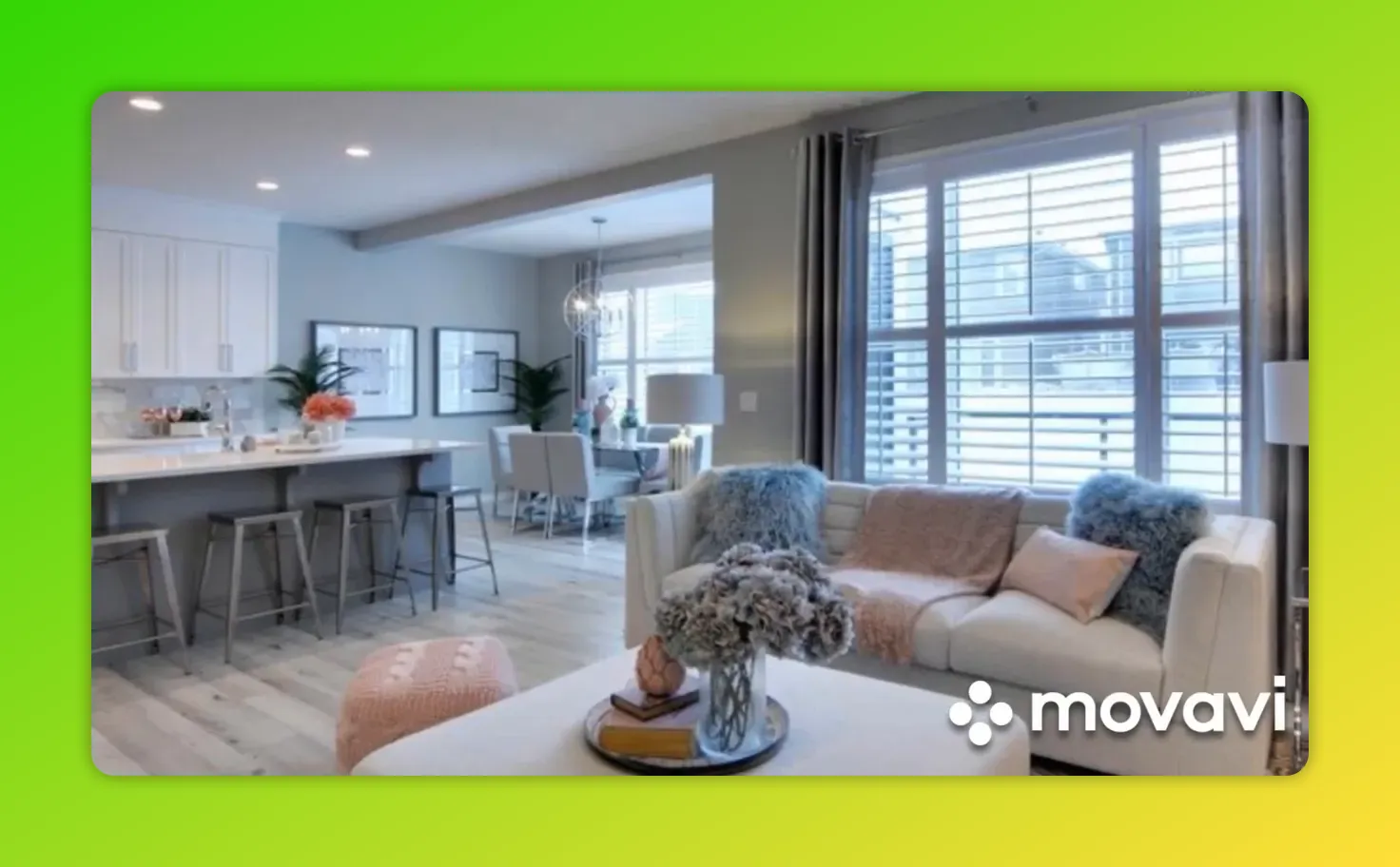
Furniture selection and arrangement are where we convert strategy into lived reality. The goal is balance: pieces should be proportional to the room, maintain sightlines, and support multiuse activities.
Key principles:
- Respect scale. In large open plans, oversized seating reads appropriate. In smaller plans, choose scaled furniture that leaves pathways clear.
- Create conversational groupings. Position sofas and chairs to foster interaction but keep the circulation path separate. A sofa back can act as a subtle room divider without closing the room.
- Anchor zones with rugs. A rug under the seating area visually contains the living zone, while a runner or rug near the island marks a service zone.
- Multiuse pieces. Select furniture with storage to reduce clutter and keep the look refined—open shelving, sideboards, and islands with drawers enhance function and decoration opportunities.
We should also consider placement for media and acoustics. Position the television and electronics so that viewing lines do not interrupt kitchen work areas. Add soft textiles and absorbent surfaces to reduce echo in open volumes.
Styling and accessories: small choices that feel intentional 🧩
Accessories provide the final layer of cohesion. Thoughtful decoration—artwork, plants, pottery, and textiles—creates personality without visual clutter. The secret is repetition and restraint.
- Repeat accents across zones. If we use navy in cushions, carry that color into a kitchen appliance, barstool upholstery, or framed art. These echoes read as a designed system rather than accidental matches.
- Limit visual competing motifs. Stick to one or two dominant patterns and use solids to balance them. Too many patterns fragment visual flow.
- Group objects in odd numbers. Collections of three or five create more compelling vignettes on open shelving or counters.
- Use plants strategically. Plants introduce color, scale, and freshness. Place a tall plant near the living area and smaller pots on the island to link zones.
When we style open plan shelving or countertops, we think in layers: base objects for scale, mid-size pieces for interest, and small items for detail. This approach to decoration keeps surfaces curated and functional.
Materials and finishes that work together 🔧
Consistent material choices prevent an open plan from feeling disjointed. We select a limited palette of primary materials—wood, stone, metal—and then choose complementary finishes.
- Match metal tones. Align fixtures, lighting, and cabinet hardware in the same family—warm brass, matte black, or satin nickel—to reduce perceived clutter.
- Coordinate countertop and backsplash. A subtle countertop with a bold textured backsplash can add interest while keeping overall harmony.
- Layer wood tones intentionally. Mixing different wood finishes is fine if the undertones are compatible. Aim for either all warm or all cool woods to avoid visual friction.
Consistent material language makes decoration choices—like cushions and ceramics—feel part of a unified interior story rather than afterthoughts.
Practical considerations: storage, acoustics, and maintenance 🧰
An open plan must perform as well as it looks. Functional needs like storage, noise control, and surfaces that tolerate life with children or pets are essential.
- Prioritize concealed storage. Cabinets, islands with drawers, and built-in seating with storage keep clutter out of sight and maintain a clean decoration aesthetic.
- Treat acoustics. Rugs, upholstered furniture, and fabric wall coverings reduce reverberation. We also recommend acoustic panels in very open, high-ceilinged spaces.
- Select durable finishes. In busy households choose resilient flooring and stain-resistant textiles to preserve the scheme over time.
Quick wins for renovating or staging an open concept ✅
When we are ready to act, prioritize interventions that deliver the largest visual impact for the effort.
- Install uniform flooring. This single change often transforms a segmented layout into a seamless room.
- Add a kitchen island. If practical, an island redefines the kitchen and expands usable workspace and storage.
- Layer the lighting. Add pendants and task lights to complement existing general lighting and create atmosphere.
- Choose a cohesive paint palette. Repaint walls and large furniture pieces in compatible undertones to quickly unify the space.
- Introduce two repeating accents. Select two accent colors and apply them to textiles, art, and small decor items across both zones for instant cohesion.
Sample project timeline
For a straightforward refresh we recommend a phased approach over four weeks:
- Week 1: Clear, measure, and finalize layout. Decide on flooring and paint tones.
- Week 2: Install flooring and paint walls. Order major pieces such as a sofa, island elements, or light fixtures.
- Week 3: Install lighting, finalize cabinetry or island details, and arrange large furniture.
- Week 4: Add textiles, artwork, plants, and curated decoration accents. Fine tune placement and lighting levels.
Putting the plan into action: a practical checklist 📝
Use this checklist to move from concept to completion. We designed it to be actionable and prioritized by visual impact.
- Map circulation paths and confirm a clear entry-to-kitchen route.
- Choose a neutral foundation paint with consistent undertones.
- Select two accent colors for repetition across both zones.
- Decide on one flooring material and run it through the entire open area.
- Specify three layers of lighting: task, statement, and ambient with dimmers where possible.
- Pick an island size that supports cooking flow and social interaction.
- Source rugs to anchor seating and dining zones.
- Create concealed storage solutions for everyday items.
- Plan for acoustic treatment if ceilings are high or the room is large.
- Curate accessories in groups of three to five and repeat accent colors.
Following this sequence ensures each decision builds on the last so the final result looks intentional rather than pieced together. The right decoration choices amplify the architecture and make daily life feel easier and more beautiful.
Final thoughts on durable style and long-term value 💼
Open concept design is both aesthetic and pragmatic. When we prioritize movement, material continuity, and layered lighting, the result is an environment that supports how we live and entertains with ease. Thoughtful decoration—repetition, restraint, and functional style—creates a timeless interior that adapts as our needs change.
Integrate practical features like durable flooring, ample storage, and easy-to-clean textiles so the beautiful moments are also low-maintenance. With planning and disciplined execution we can create an open kitchen and living room that feels like a single, welcoming home.
This Elegant Minimalist Home: Practical Decoration Strategies for Modern Luxury
We examine a refined approach to decoration where restraint becomes the highest form of sophistication. The defining idea is simple: decoration is not a catalogue of objects; it is the orchestration of space, light, and material to create calm. We use this elegant minimalist residence as a case study in modern decoration, extracting practical techniques that translate directly to renovations, new builds, or staged interiors.
Table of Contents
- 🪟 First impressions: How elevation and materials shape decoration
- 💡 Entryway and foyer: Decoration that sets the tone
- 🛋️ Living area: Open-plan decoration and the rules of calm
- 🔥 Fireplace and focal surfaces: Decoration with architectural intent
- 🍽️ Dining room: Decoration as experience
- 👩🍳 The kitchen: Decoration driven by function and restraint
- 🗄️ The butler's pantry: Hidden decoration strategies
- 🌿 Indoor-outdoor flow: Decoration beyond walls
- 🏢 Home office: Decoration that supports focus
- 🪜 Staircase: Decoration as architectural sculpture
- 🛏️ Primary suite: Decoration for comfort and retreat
- 🛁 Primary bath: Decoration with a spa sensibility
- 👗 Walk-in wardrobe: Decoration as boutique retail
- 🛏️ Guest suites and secondary rooms: Decoration that respects privacy
- 🧺 Laundry and utility spaces: Decoration for efficiency
- 🏡 Backyard, pool, and lanai: Exterior decoration as lifestyle
- 🌙 Exterior lighting: Nighttime decoration and atmosphere
- 🔋 Sustainability and smart systems: Decoration with responsibility
- 🧭 Principles to apply: A practical decoration checklist
- 🛠️ Budgeting decoration: Where to invest and where to economize
- 🧩 Decoration mistakes to avoid
- 📐 Decoration exercises to implement immediately
- 📚 Examples of decoration choices that endure
- 🔁 Decorating with flexibility: How to evolve a scheme
- 🔍 Final reflections: How decoration defines experience
- 📝 Practical next steps for your decoration project
- 📸 Visual references and inspirations
- 🔧 Maintenance-minded decoration
- 📦 Sourcing and procurement for decoration
- 📅 Timing your decoration: Phased delivery
- 📣 Final notes on decoration as investment
- 🔗 Want to apply these decoration principles?
🪟 First impressions: How elevation and materials shape decoration
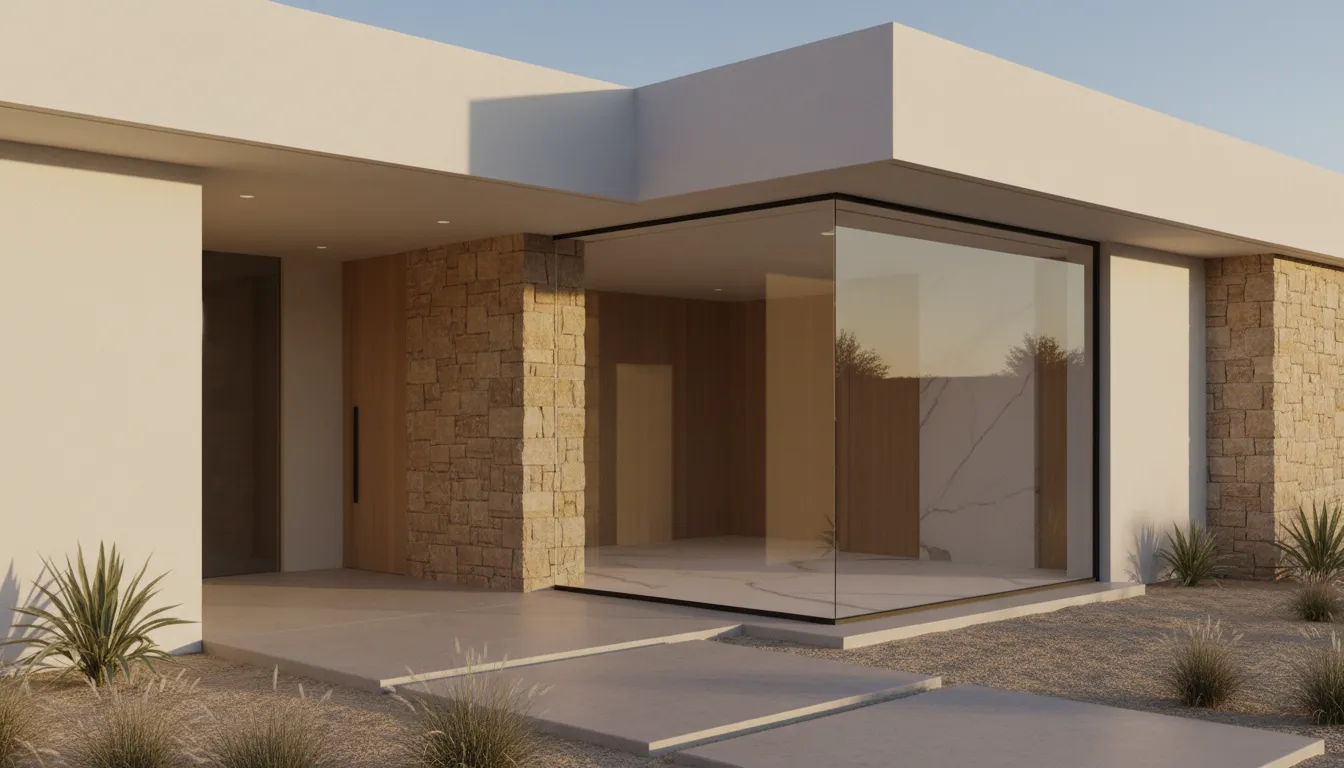
From the street, the home announces its intent through confident geometry and a restrained material palette. The façade combines natural stone with smooth stucco to create a tactile contrast that reads as both organic and sophisticated. Effective decoration starts at this threshold: the materials you choose for the exterior become the visual promise of what lies inside.
Key principles for exterior decoration we can apply:
- Limit the palette to two or three complementary materials so the façade reads as cohesive rather than busy.
- Use texture to add warmth — stone, timber, and textured plaster integrate with landscaping to soften strong geometry.
- Treat windows as punctuation marks — floor-to-ceiling glazing creates vertical rhythm and hints at interior volume.
When we plan decoration for a property, we consider how each exterior element controls expectations. A deliberate, simple palette invites a quieter interior scheme and amplifies perceived space.
💡 Entryway and foyer: Decoration that sets the tone
The entry is the spatial thesis statement. Double-height ceilings, a massive pivot door, and a sculptural light fixture communicate a clear point of view. This is decoration as storytelling: one or two bold choices define the narrative and free the rest of the design to be restrained.
Elements to prioritize in foyer decoration:
- Scale first. High ceilings permit larger fixtures and give room for vertical accents.
- Quality lighting. A single sculptural fixture serves as jewelry; task lighting remains discreet.
- Minimal accessories. A small console, a tray for keys, and a purposeful rug are enough.
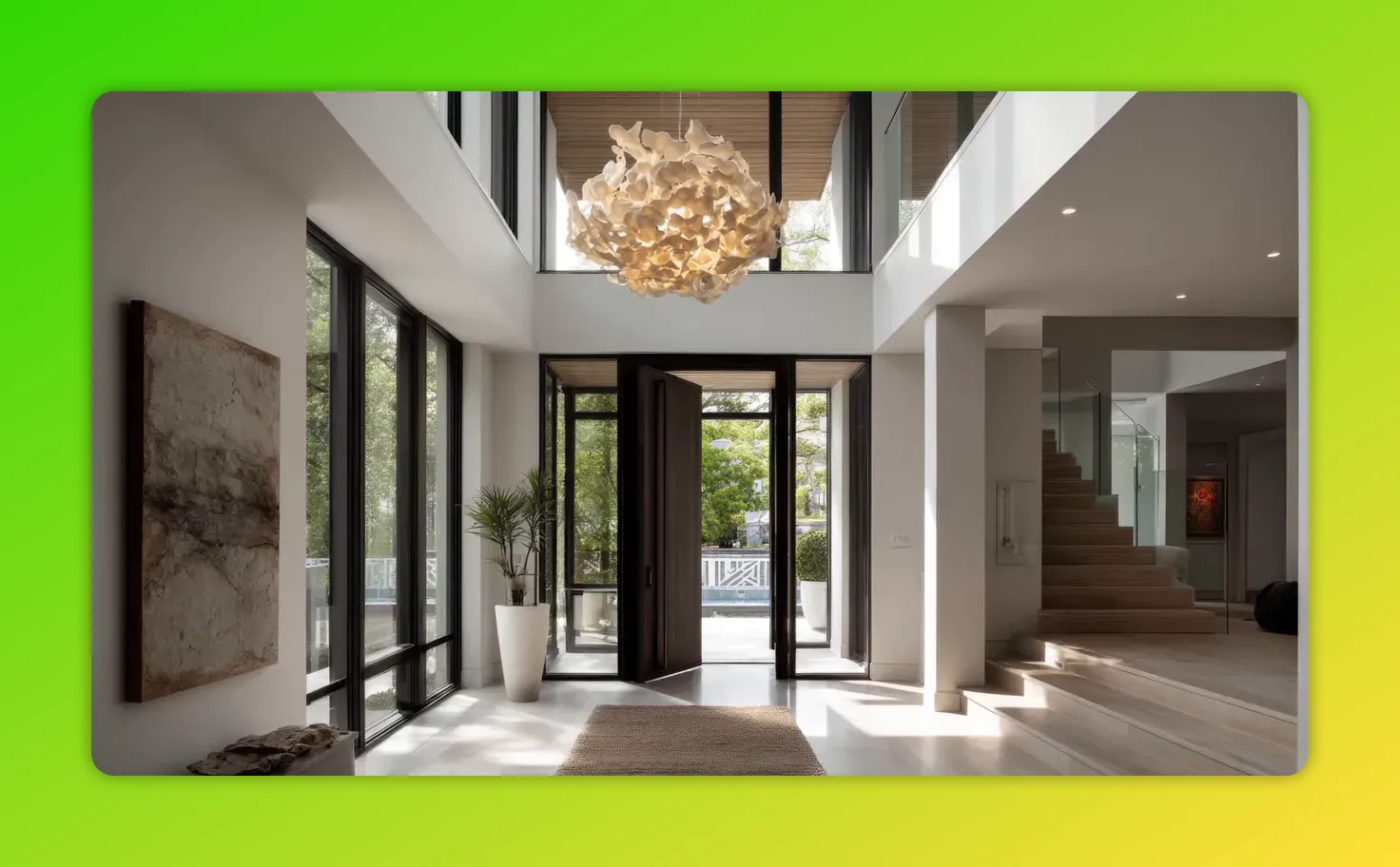
We adopt a "less but better" approach to decoration here. The foyer acts like a visual filter: what is introduced should be durable, tactile, and proportionally correct. This makes entering the home a calm, composed experience rather than a noisy one.
🛋️ Living area: Open-plan decoration and the rules of calm
The living area showcases open-concept decoration done well. A monochromatic color scheme of creams, beiges, and soft grays produces a sanctuary-like backdrop. Furnishings are intentionally low profile and arranged for conversation, not spectacle.
Techniques for living area decoration that create comfort without clutter:
- Anchor with a single high-quality piece. In this home the Italian leather sectional becomes the focal anchor for layout and scale.
- Vary textures, not colors. Mix leather, wool, stone, and timber to keep a neutral palette dynamic.
- Prioritize circulation. Furniture should support flow and social interaction rather than fill every square foot.
Quiet luxury in decoration emphasizes material and craftsmanship over brand signage. We recommend selecting durable finishes that age gracefully; a well-made leather sofa, a marble slab, or solid timber tables pay visual dividends over time.
🔥 Fireplace and focal surfaces: Decoration with architectural intent
A linear gas fireplace wrapped in floor-to-ceiling marble demonstrates how functional elements can be elevated through decoration. Instead of decorative clutter, the surface itself becomes the ornament.
When incorporating a fireplace or similar focal surface into decoration plans:
- Choose a single strong material that extends vertically to emphasize height and create a visual spine.
- Let subtle patterning do the work. Natural veining or grain introduces movement without overwhelming the space.
- Balance with negative space. Keep surrounding walls and accessories restrained so the feature breathes.
We always advise against over-accessorizing an architectural feature. Treat it like a piece of built-in art: the decoration should frame it rather than compete with it.
🍽️ Dining room: Decoration as experience
The dining area bridges casual living and formal hosting. A long white oak table paired with wishbone-style chairs creates an approachable, tactile setting. The proximity to garden views makes each meal feel connected to the outdoors, an important principle in contemporary decoration.
Dining decoration guidelines we recommend:
- Prioritize durable materials for tables and chairs so the decoration supports daily life.
- Use seating as texture. Mixed materials in chairs help add depth without changing the overall color story.
- Frame the view. Position seating and lighting to emphasize external vistas as part of the decorative composition.
Even in a neutral scheme, decorative impact comes from scale, proportion, and the deliberate omission of competing elements.
👩🍳 The kitchen: Decoration driven by function and restraint
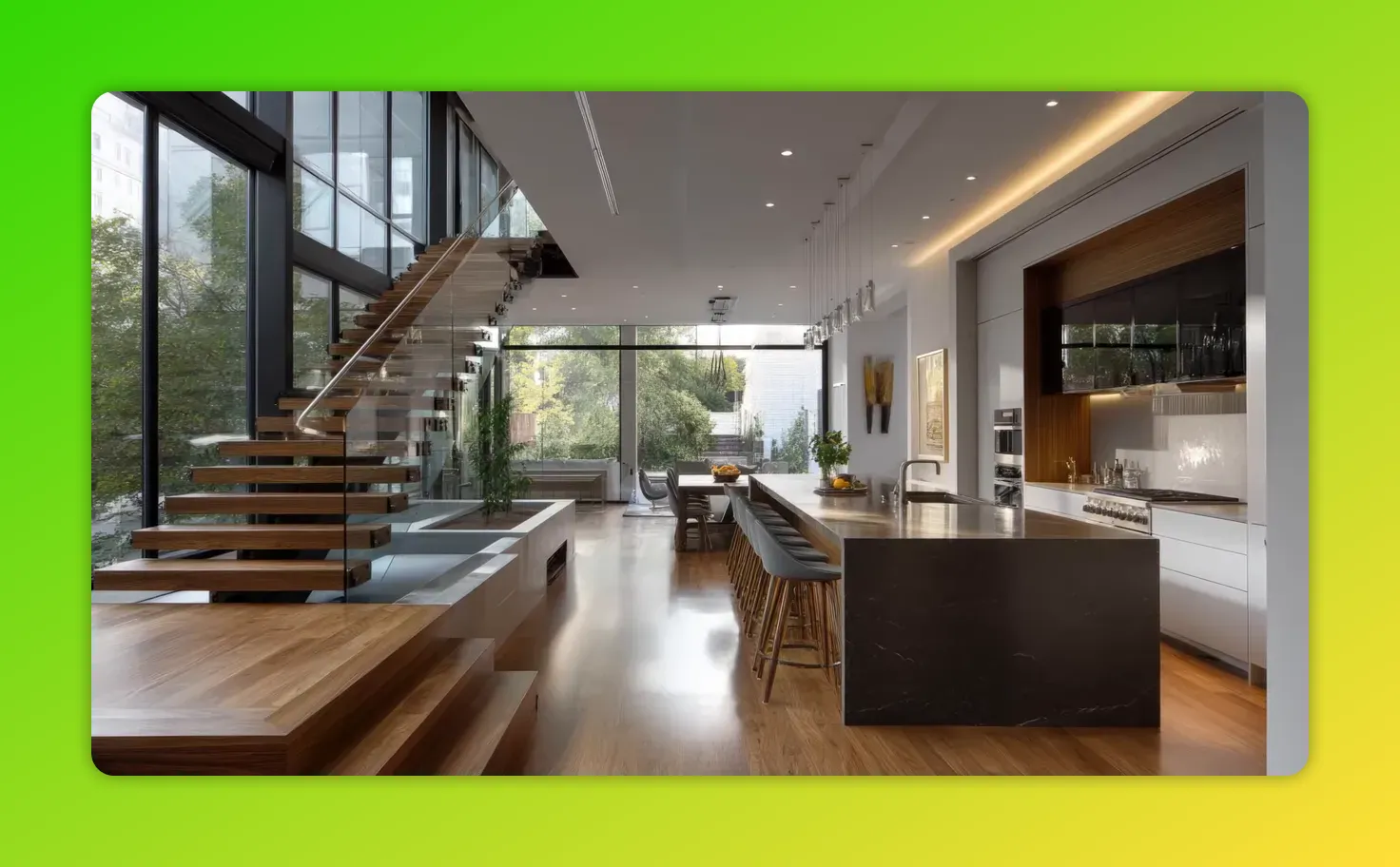
The kitchen is the most instructive room for contemporary decoration. Handless cabinetry in matte charcoal, a waterfall quartz island, and integrated appliances demonstrate how utility and aesthetics merge. Decoration here is about concealing visual noise while exposing the craft of the finishes.
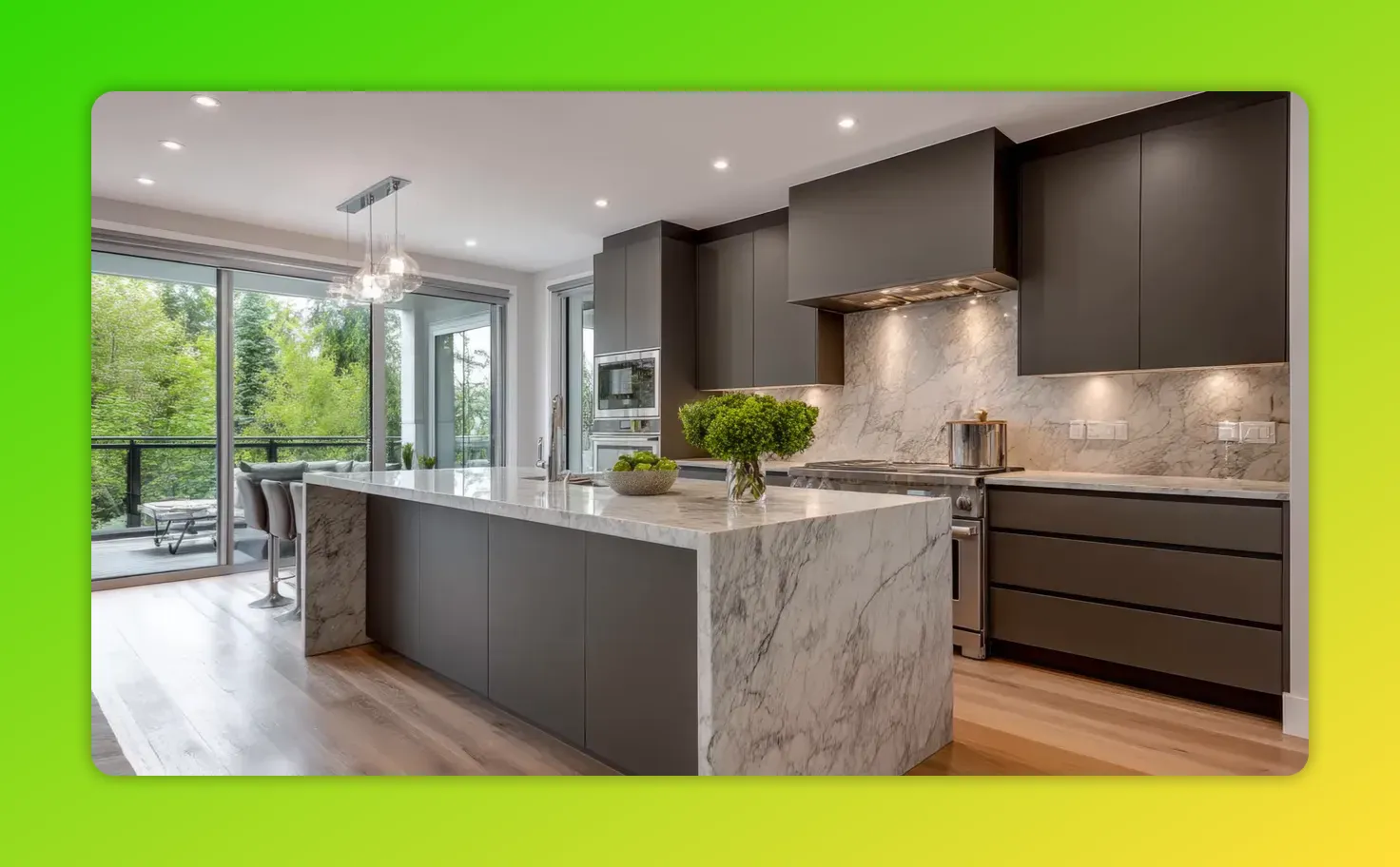
Kitchen decoration essentials to adopt:
- Hide rather than display. Flat-panel or handless cabinets reduce visual clutter and make the countertop the focal plane.
- Invest in a high-quality island. A waterfall countertop provides a sculptural central object that functions as both work surface and decorative anchor.
- Layer lighting. Under-cabinet LEDs and pendant task lights deliver both function and mood.
We also recommend planning for logistics as decoration. The presence of a pot filler, integrated smart appliances, and a hidden pantry reduces the need for countertop appliances and keeps the decorative field serene.
🗄️ The butler's pantry: Hidden decoration strategies
A concealed butler's pantry is one of the smartest decoration moves in luxury homes. It allows heavy prep to happen out of sight so the primary kitchen remains uncluttered. In decoration terms, hidden service spaces are as important as visible ones.
How to treat service spaces in decoration planning:
- Design for sequence. The main kitchen should look undisturbed during entertaining; the pantry handles dirty work.
- Use consistent surfaces. Extend similar finishes into the pantry to maintain the visual narrative.
- Include task-specific storage. Open shelving, a second dishwasher, and appliance niches keep functionality streamlined.
We consider the butler's pantry an invisible layer of decoration — it preserves the composition of primary spaces.
🌿 Indoor-outdoor flow: Decoration beyond walls
Decoration extends to how spaces connect. Massive sliding glass pocket doors that vanish into the walls effectively double the living area and allow the exterior palette to become part of the interior decoration.
Principles to strengthen indoor-outdoor decoration:
- Match materials. Carry exterior stone, timber, or tones into the interior so the transition is seamless.
- Plan for shade. Covered lanai and adjustable screens control light and maintain comfort without sacrificing the view.
- Compose outdoor rooms. An outdoor kitchen, lounge, and reflective pool act as exterior decorative elements.
We view outdoor areas as an extension of interior decoration rather than separate entities. Treat them with the same attention to material, scale, and lighting.
🏢 Home office: Decoration that supports focus
Remote work requires domestic spaces that support deep concentration. The home office in this house is tucked into a quiet ground-floor corner, with built-in shelving and a floating desk facing a private courtyard. Decoration is pared back to reduce distractions and enhance productivity.
Guidelines for productive office decoration:
- Use calming tones and natural wood to reduce visual strain.
- Prioritize storage so supplies and cables remain out of sight, maintaining a composed decorative plane.
- Frame a view to provide a restorative connection to nature without overwhelming the workspace.
We recommend integrating task lighting and acoustical solutions early in the decoration plan so the office functions well for long hours.
🪜 Staircase: Decoration as architectural sculpture
The floating staircase is a striking example of decoration embodied in structure. Solid timber treads, a central steel spine, and frameless glass balustrades make it a vertical sculpture that defines the home's character. When a circulation element is treated as decoration, every movement between floors becomes an experience.
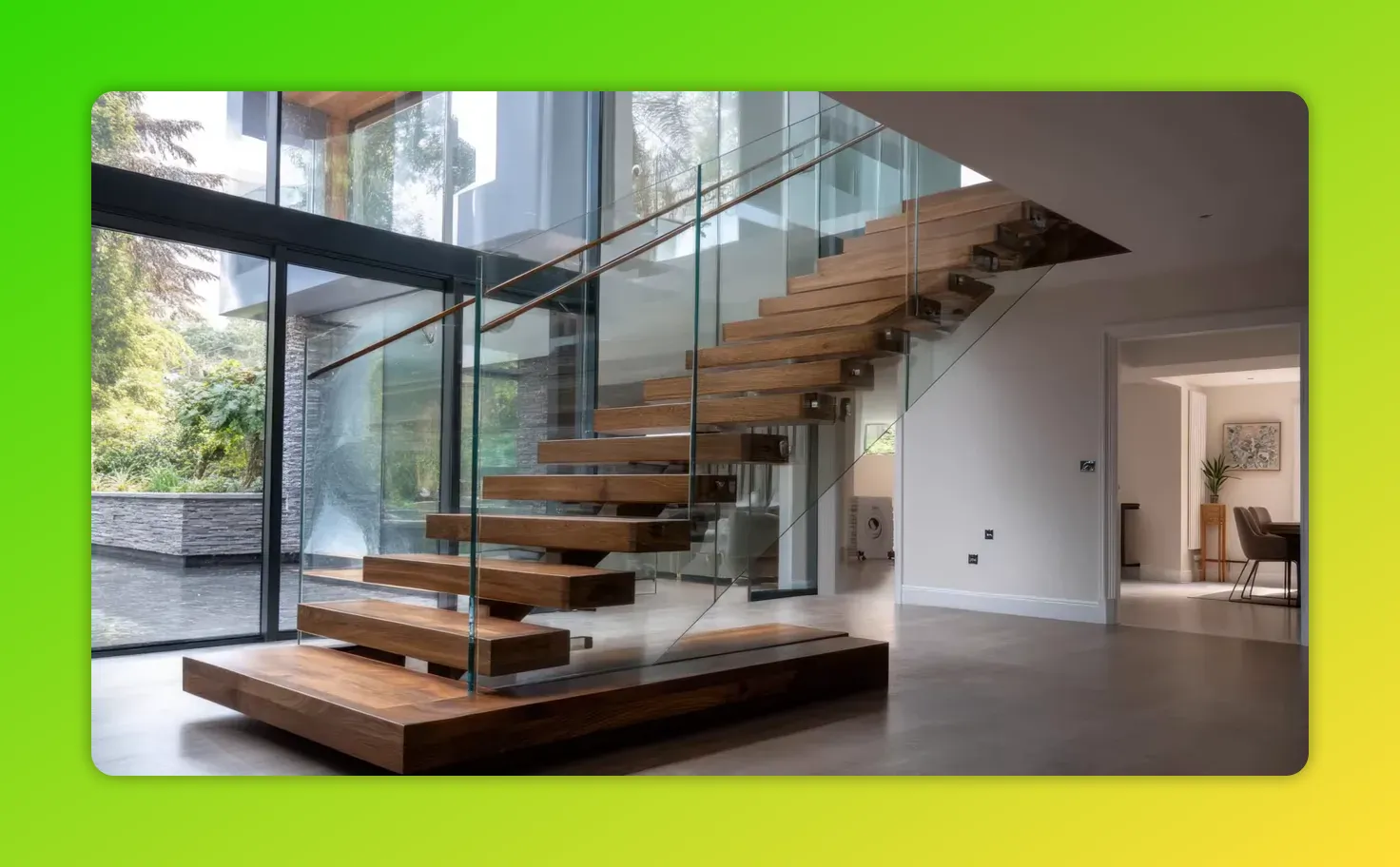
How to design staircases as decorative elements:
- Keep lines clean so the staircase reads sculpturally against the architectural backdrop.
- Use materials that contrast yet harmonize — timber treads with steel supports is a classic contemporary combination.
- Light it intentionally to emphasize form and provide safe circulation without adding visual clutter.
We often advise that a staircase can be the single most powerful decorative investment in a new build because of its daily visibility and sculptural potential.
🛏️ Primary suite: Decoration for comfort and retreat
The primary bedroom shifts the decoration language from architectural boldness to softness. Wool carpeting, heavy linen drapery, and a padded headboard create a cocoon-like environment. The bedroom demonstrates how decoration changes functionally across public and private zones.
Private suite decoration strategies:
- Layer soft materials — rugs, drapes, throws — to add tactile depth.
- Create separate zones within the suite for sleeping, lounging, and dressing to support different activities.
- Control natural light with drapery or blinds so the room can switch easily between bright and dim.
We encourage balancing the public-facing boldness of other rooms with restful domestic decoration in sleeping areas.
🛁 Primary bath: Decoration with a spa sensibility
The ensuite bath reads like a five-star retreat. A freestanding soaking tub in front of a picture window, a floating dual vanity, and large-format porcelain tiles create a spa-like environment. Decoration here focuses on materials that are beautiful and low maintenance.
Bathroom decoration recommendations:
- Prefer large-format tiles to reduce grout lines and create a calm visual field.
- Choose floating vanities to increase perceived floor space and simplify cleaning.
- Incorporate nature — views, plantings, or warm materials — to reinforce tranquility.
We emphasize planning for lighting and ventilation early; decoration that ignores function will not age well in wet environments.
👗 Walk-in wardrobe: Decoration as boutique retail
A walk-in wardrobe designed like a boutique is a clear statement: dressing becomes an elevated ritual. Glass-fronted cabinets, shoe displays, and a central island turn storage into a decorative showcase.
Practical decoration tips for wardrobes:
- Use layered lighting to flatter fabrics and surfaces.
- Include display moments for special items while keeping daily wear accessible.
- Choose finishes that reflect light to keep the space feeling generous.
We recommend treating the wardrobe as both functional storage and an opportunity to reinforce the home's material story through consistent decorative choices.
🛏️ Guest suites and secondary rooms: Decoration that respects privacy
Guest bedrooms receive the same design rigor as the primary suite, but with a neutral, accommodating approach. Each room has a private bathroom and ample storage, which is essential decorative infrastructure.
How we approach decoration for secondary rooms:
- Keep palettes flexible to suit a variety of tastes and needs.
- Prioritize comfort — mattress quality, layered bedding, and adequate lighting.
- Provide storage so guests can settle without creating clutter that would disrupt the decorative composition.
We believe good decoration anticipates how a space is used by different people and adapts accordingly.
🧺 Laundry and utility spaces: Decoration for efficiency
Even service spaces deserve design attention. Pattern tile flooring, folding counters, and cabinetry that conceals detergents demonstrate how decoration elevates everyday chores.
Utility decoration checklist:
- Design for ergonomics — counter heights and machine placement matter.
- Use durable finishes that handle moisture and wear.
- Keep visual calm by concealing supplies and using cohesive finishes.
We find that well-considered decoration in utility rooms reduces daily friction and reinforces the overall sense of order in a home.
🏡 Backyard, pool, and lanai: Exterior decoration as lifestyle
The rear of the house focuses on leisure and hospitality. A covered lanai with a wood-paneled ceiling, an outdoor kitchen, manicured low-maintenance landscaping, and a reflective swimming pool create a resort-like experience. Decoration outdoors must balance durability with atmosphere.
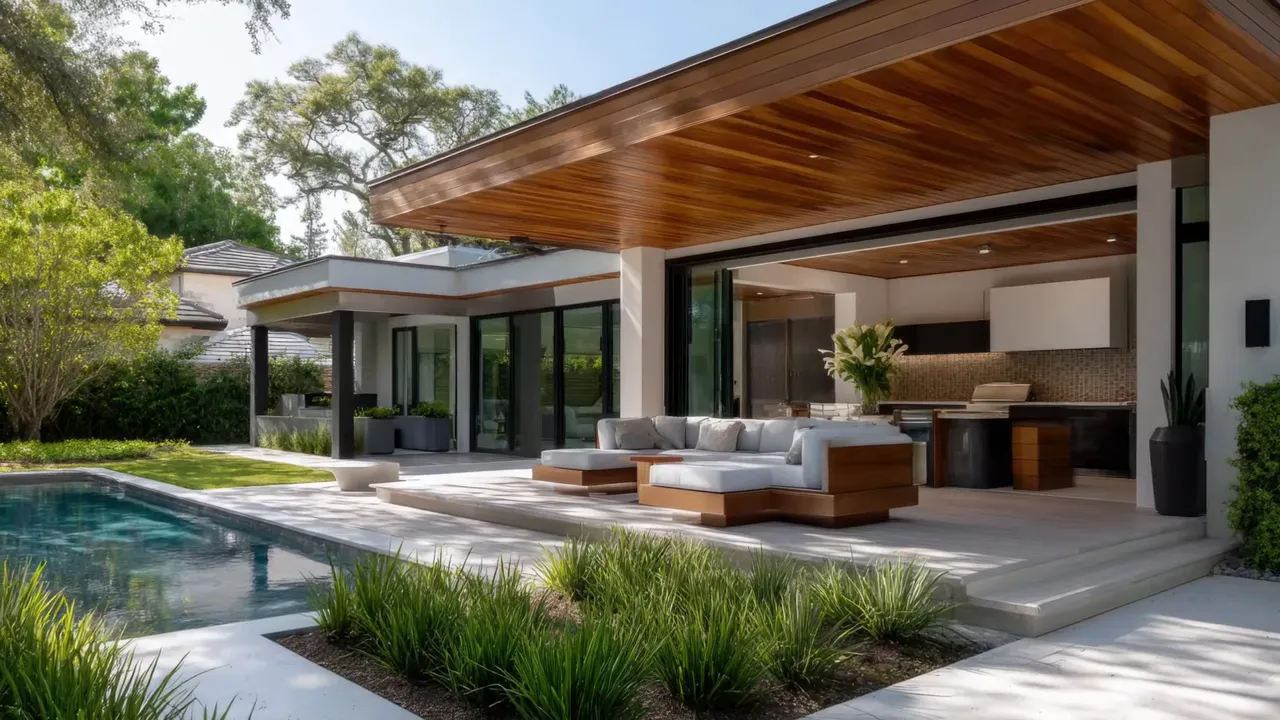
Outdoor decoration principles we follow:
- Use native and drought-tolerant plants for low maintenance and seasonal interest.
- Choose resilient materials for decking, seating, and outdoor kitchens to withstand weather.
- Define outdoor rooms with overhead structures and rugs so the space reads as intentional.
We treat the pool and surrounding deck as compositional elements in the decorative plan — their finishes, lighting, and orientation affect how the house is used throughout the day.
🌙 Exterior lighting: Nighttime decoration and atmosphere
Exterior lighting transforms a home after dark. Uplights that highlight stone textures, path lights for circulation, and subtle pool illumination create an evening composition that reads differently than daytime decoration.
Nighttime decoration considerations:
- Design layered lighting with uplights, downlights, and accent lights to sculpt the exterior.
- Use warm temperatures to create a welcoming ambiance.
- Control spill so light enhances architecture without creating glare.
We design exterior lighting as the final decorative layer that reconciles form and function, making the building expressive at all hours.
🔋 Sustainability and smart systems: Decoration with responsibility
Decoration in modern homes must include environmental performance. Solar panels, energy-efficient glazing, and home automation are integral to how we decorate today. These systems are functional but also shape material choices and spatial planning.
How sustainability informs decoration:
- Orient spaces to harness daylight and reduce artificial lighting needs.
- Specify high-performance glazing that preserves views while improving thermal comfort.
- Integrate renewable systems like rooftop solar so they become part of the architectural narrative rather than afterthoughts.
We treat sustainability as a design constraint that enhances decoration by forcing smarter material and form decisions.
🧭 Principles to apply: A practical decoration checklist
To translate these observations into action, we compiled a practical checklist that focuses on decoration decisions that matter most:
- Start with architecture — let the building massing and materials lead decoration choices.
- Control the palette — two dominant materials and a limited color range create cohesion.
- Layer textures — combine smooth and textured surfaces for visual interest without color saturation.
- Prioritize lighting — lighting is decoration; invest intentionally in fixtures and placement.
- Conceal clutter — integrated storage and hidden service rooms keep decorative surfaces clean.
- Value touchpoints — materials we handle daily should be durable and pleasant to the touch.
- Design transitions — ensure doors, glazing, and thresholds mediate between interior and exterior palettes.
- Plan for night — exterior lighting must be part of the decorative brief.
We recommend using this checklist at the schematic design stage so decoration and architecture evolve together rather than retrofitting one to suit the other.
🛠️ Budgeting decoration: Where to invest and where to economize
Deciding how much to spend on decoration requires strategic prioritization. We advise investing in items that are visually central, tactile, and used daily because they deliver long-term value.
Suggested spending split for decoration decisions:
- 30% Architecture and finishes — flooring, wall cladding, and fixed cabinetry that define character.
- 30% Core furniture and lighting — sectional, dining table, bed, primary fixtures.
- 20% Systems and integration — glazing, automation, and built-in appliances.
- 20% Accessories and landscaping — rugs, art, soft goods, and planting that complete the narrative.
We prioritize long-term value: invest where wear, daily interaction, and permanence demand it, and be more flexible with seasonal or easily replaced accessories.
🧩 Decoration mistakes to avoid
Common errors in contemporary decoration are easy to correct when identified early. We list the most frequent missteps and how to avoid them:
- Overloading the palette. Avoid introducing too many colors or materials that compete for attention.
- Ignoring scale. Too-small furniture in large spaces or oversized fixtures in intimate rooms break the visual balance.
- Underlighting. Flat lighting flattens even the best materials; plan multiple layers.
- Prioritizing trend over quality. Cheap trend pieces can age poorly; prefer a few on-trend accessories over low-quality major investments.
- Neglecting function. Decorative ideas that hinder daily use will be removed or covered up; always test for practicality.
We recommend mockups and material samples at full scale to validate decoration decisions before procurement.
📐 Decoration exercises to implement immediately
Here are three short exercises we use to refine decorative intent during design or renovation phases:
- Material board edit. Lay out all proposed materials together. Remove anything that competes with the main two textures.
- Lighting rehearsal. Simulate morning, afternoon, and evening lighting conditions with sample fixtures to see how decoration shifts across time.
- Furniture layout audit. Sketch seating zones and circulation paths; prioritize conversation and sightlines to views over decorative density.
These exercises reveal conflicts early and ensure decoration supports living patterns instead of dictating them.
📚 Examples of decoration choices that endure
Several decoration decisions in this residence deserve replication because they age well and remain visually relevant:
- Handless cabinetry — low visual noise and high durability.
- Waterfall island — sculptural and functional, it anchors both kitchen and social life.
- Large-format tiles — fewer grout lines, cleaner look, easier maintenance.
- Natural timber accents — introduce warmth and longevity in an otherwise neutral scheme.
- Integrated storage — keeps decorative surfaces clear and intentional.
We see these elements repeatedly across successful projects because they balance aesthetics with useability.
🔁 Decorating with flexibility: How to evolve a scheme
Decoration is not static. We design for layered change so interiors can adapt to life stages, evolving tastes, or new owners. Strategies include:
- Neutral base with accent flexibility — use rugs, art, and soft goods to introduce color that can be updated easily.
- Modular furniture — pieces that can be reconfigured or relocated as needs shift.
- Plug-and-play lighting — fixtures that can be swapped without major rewiring.
We plan decoration with a five- to ten-year horizon while allowing for short-term refreshes that keep the home current without replacing major elements.
🔍 Final reflections: How decoration defines experience
Decoration is most successful when it serves the way people live. This home models a quiet luxury where restraint, material quality, and spatial clarity create a sense of calm. Decoration here is not ornamental excess; it is the deliberate selection and arrangement of elements that make daily life more humane and beautiful.
When we approach decoration, we ask three core questions for every decision:
- Does this choice enhance the daily experience?
- Will it hold up physically and visually over time?
- Does it align with the architectural intention of the space?
Answering these questions ensures decoration remains purposeful, durable, and emotionally resonant.
📝 Practical next steps for your decoration project
If you are ready to apply these ideas, follow this short action plan:
- Define your architectural voice — decide the two primary materials and the dominant color temperature for lighting.
- Create a master finish palette — collect samples and commit to no more than five finishes for major surfaces.
- Plan storage first — integrate concealed storage so decorative surfaces remain minimally adorned.
- Choose one sculptural statement — a staircase, a fireplace, or an island that anchors the scheme.
- Mockup lighting and textiles at full scale to assess daylight and evening character.
We recommend completing these steps before purchasing major furniture or artwork so decoration evolves from the home's bones rather than dictating structural choices.
📸 Visual references and inspirations
Use visual references to communicate decoration intent to contractors, carpenters, and artisans. Capture images of material samples in the desired lighting and create a shared mood board to avoid misinterpretation.
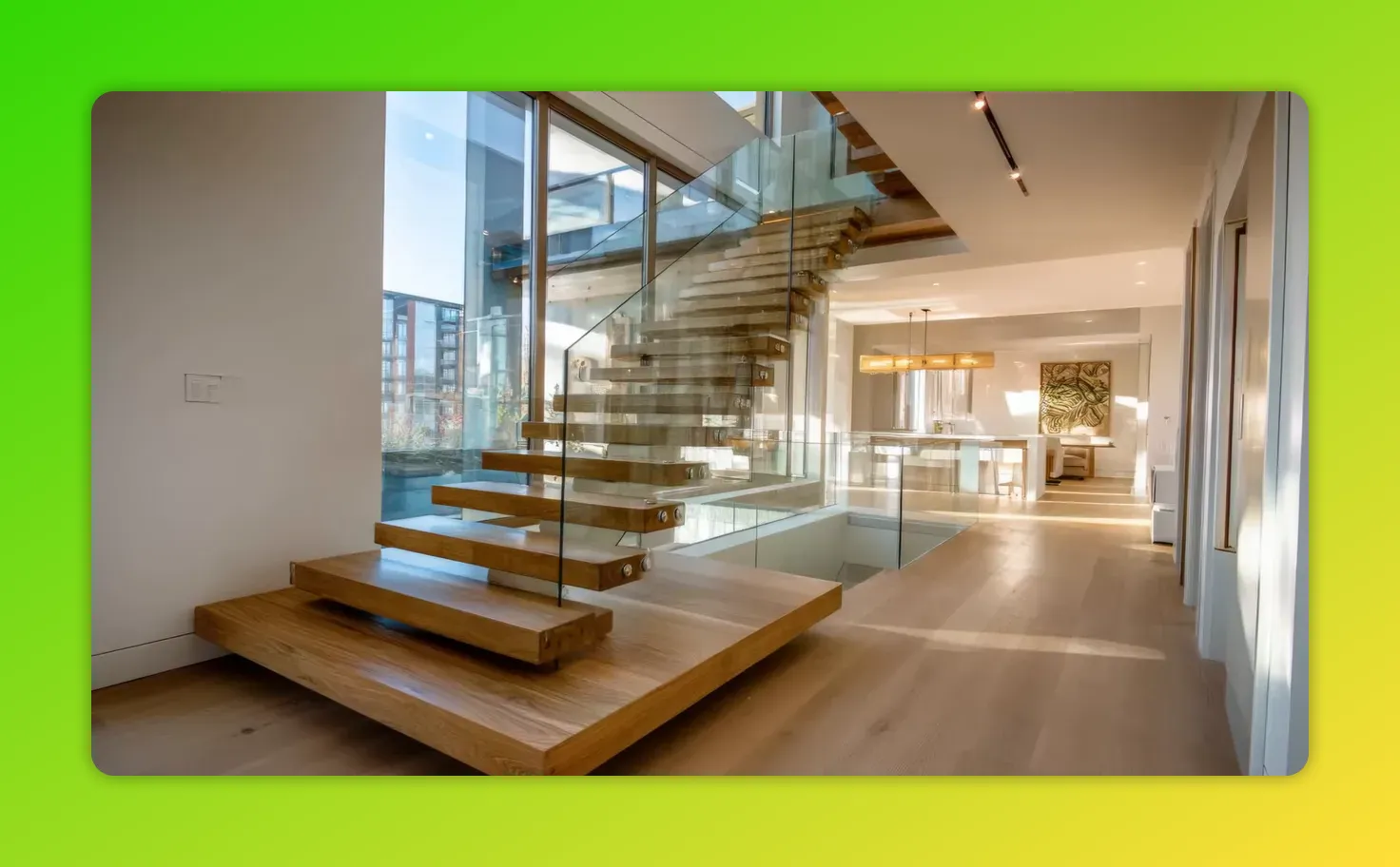
We find that physical samples and annotated photos reduce costly revisions and make the decoration process more collaborative.
🔧 Maintenance-minded decoration
Durability is central to considered decoration. Select finishes and fabrics that clean well and show less wear. For high-traffic zones, favor materials that age gracefully and can be restored rather than replaced.
Maintenance guidelines to include in your decoration brief:
- Choose stain-resistant upholstery for social areas.
- Specify sealers for stone and natural surfaces where needed.
- Plan service access to integrated systems so decorations do not obstruct repairs.
We always balance aesthetic ambition with the long-term realities of living and upkeep.
📦 Sourcing and procurement for decoration
Procurement can make or break the decorative vision. We recommend a staggered ordering approach that aligns deliveries with installation milestones.
Procurement tips:
- Order long-lead items early — custom cabinetry, stone slabs, and large fixtures often define timelines.
- Keep a reserve budget for finish upgrades discovered during mockups.
- Work with local artisans for custom joinery and furniture to ensure scale and finish accuracy in decoration.
We coordinate procurement and decoration decisions to avoid compromises caused by timing or availability.
📅 Timing your decoration: Phased delivery
Phasing decoration allows you to prioritize the most used spaces while leaving room to refine secondary areas. Begin with core living spaces, then move to private suites and utility rooms.
Phasing approach:
- Main living and kitchen
- Primary suite and wardrobe
- Outdoor living and pool area
- Guest suites and utilities
We phase so the home becomes usable and tasteful from day one while providing the flexibility to adjust secondary decorative choices as needs clarify.
📣 Final notes on decoration as investment
Decoration is an investment in daily life and property value. Thoughtful choices in materials, lighting, and storage increase utility and aesthetic longevity. When we design with restraint and clarity, decoration becomes an asset rather than a liability.
We encourage teams to document decisions, maintain a central sample library, and prioritize high-impact items early. These steps make decoration purposeful, measurable, and aligned with how the home will be inhabited.
🔗 Want to apply these decoration principles?
Use the checklist and exercises above as a roadmap. Start by defining your material palette and one sculptural element, then build storage and lighting systems that protect the decorative composition. Decoration should make life more graceful, not more complicated.
We look forward to helping projects that aim for quiet, lasting elegance rather than ephemeral trendiness.
Decoration is the continuous act of curating how we live. When executed with discipline, it transforms a house into a composed home.

